Day one: Executive order 14165
Donald Trump’s promises to bypass Congress and take major executive action on the first day of his new presidency were a common refrain on the campaign trail, including a pledge to “be a dictator” on that day alone. And on 20th January he delivered shock and awe, signing a record 26 executive orders at the Oval Office and in front of supporters at a sports arena. Months later, the effects of that dizzying slew of signatures are still being felt. Here is the third of five interviews with Americans who are living with the impact of first-day executive orders
20th January 2025 (Taken from: #58)
This is the third in a five-part series about the impact of Donald Trump’s first-day executive orders, published in issue 58 of Delayed Gratification. It covers an executive order on securing the Mexican border.
Executive order 14165
“Securing our borders”
Javier Villalobos, mayor of McAllen, Texas
The declaration of a national emergency at the border was the first specific policy mentioned in Trump’s inauguration speech. “Over the last four years, the United States has endured a large-scale invasion at an unprecedented level,” the president said, and later that afternoon at the Resolute desk he signed executive order 14165.
In the month after 20th January, US Customs and Border Protection recorded the lowest apprehensions of unauthorised migrants in its history, a 94 percent decrease year on year. Trump’s border crackdown has seemingly fulfilled his executive order promise to stop the “flood of illegal aliens”. It has proven popular – according to a May poll by Marquette Law School, the border is the only major issue on which Trump’s approval ratings are above 50 percent.
In the Texas border city of McAllen, Republican mayor Javier Villalobos says that while the border crisis was rarely as extreme as some of the media narratives claimed, his citizens are thankful for this year’s drop in new arrivals. “They’re pleased we don’t have the issues we used to have with crossings,” he says, adding that the local Catholic-run charities offering support to migrants have had a much-needed reprieve.
With a population of 160,000, McAllen is the biggest city in the Rio Grande Valley, a strip of land straddling the border on the southernmost tip of Texas. Almost 90 percent of the city, like its mayor, is of Hispanic origin. A few miles separate the city from the physical border, and were it not for the queues for customs and immigration, the drive to the Mexican city of Reynosa would take 25 minutes. In this bilingual, bicultural town, immigration has long been incorporated into daily life.
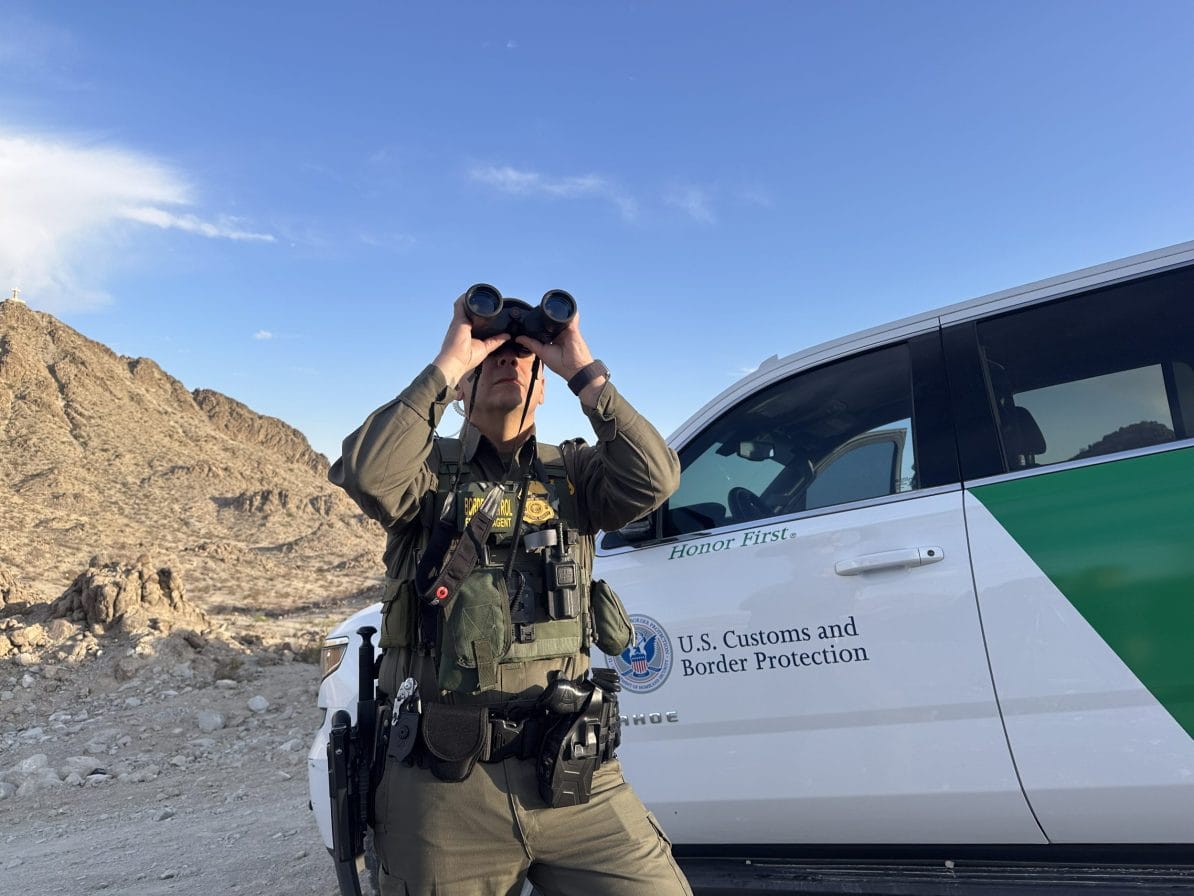
The Rio Grande Valley is also the busiest transit point for unauthorised immigration into the US, and there were periods during the Biden administration when more than 1,000 migrants a day would leave their tent camps in Reynosa to cross the river and hand themselves in to the region’s border authorities. The situation on the ground has changed dramatically since 20th January, though. Today around 8,000 active duty troops are now stationed along the length of the US/Mexico border. There are spy planes in the skies above and around 100 armoured vehicles once used in Iraq and Afghanistan patrol the ground.
There is now also a very visible new deterrent to illegal migration – the Immigration and Customs Enforcement (Ice) raids taking place in southern Texas and nationwide, which reinforce the message that those who do make it in without documentation will always be looking over their shoulders. The Trump administration has said it will carry out “the single largest mass deportation programme in history”, and daily arrests of migrants have gone from 300 on average in Biden’s last year in office to more than 2,000 in early June 2025, with a target of 3,000.
Villalobos is clear that “criminals and bad elements should be removed from the country”, but is worried that raids in McAllen are harming his community. “It’s affecting people, companies and families that have been here for a very long time,” he says. Ice agents have raided businesses and construction sites in the Rio Grande Valley, sometimes, says Villalobos, “without a warrant for specific individuals.”
“I’m a little concerned about that,” he says. “I think we run into possible constitutional issues.”
The raids’ chilling effect can be felt in quiet stores in McAllen. Undocumented employees are scared to turn up to work, and some construction sites have paused projects. Keen to stress that the city gets no information from the federal government about where and when the raids will take place – and has no power to stop them from happening – the mayor is particularly worried about the economic impact of what he describes as Ice’s “dragnet” approach. “It’s going to start affecting the economy, hitting your pocket, the food on the table,” he says.
The number of legal visitors from Mexico, who like to shop and dine across the border before returning home, is down by 25 percent, which is also hurting the local economy. “They’re afraid [to come to the US],” Villalobos says. The mayor further points out that the tariffs Trump imposed on Mexico on 1st February – initially 25 percent, but since subject to a series of hikes, pauses and exemptions – have caused problems, and no shortage of confusion, for many McAllen firms reliant on cross-border trade.
Villalobos says that the raids are causing a change in how locals talk about the administration’s approach to undocumented immigrants. “Now you have Democrats and Republicans saying, ‘We need to find a legal pathway for some of these… good, hardworking, law-abiding individuals to help themselves.’”
The mayor warns that the economic and human impact of the raids risks undermining Trump’s border achievements. Such outspokenness has seen some label him a ‘Rino’, a Republican In Name Only, a pejorative term often used to criticise GOP members who stray from the party line. “I try to do what I think is right and that’s it,” says the mayor. “I try to do what’s fair… and fair is allowing somebody that has been productive for our country and our economy to have a pathway to legal employment. It’s that simple – it’s beneficial to them, and it’s beneficial to us.”
Part one in this series, about executive orders focusing on DEI and Doge, can be read here. Part two, about designating foreign gangs as terrorists, can be read here.
Slow Journalism in your inbox, plus infographics, offers and more: sign up for the free DG newsletter. Sign me up
Thanks for signing up.