“A 19th century war, with 20th century tactics and 21st century technology”
February 2025 saw world leaders visit Kyiv to show their solidarity with President Volodymyr Zelensky as the full-scale invasion of Ukraine entered its fourth year. We talked to Harvard history professor and Ukraine national Serhii Plokhy about the course the war has taken, how it is changing the nature of conflict – and its implications for global nuclear security in a rapidly destabilising world
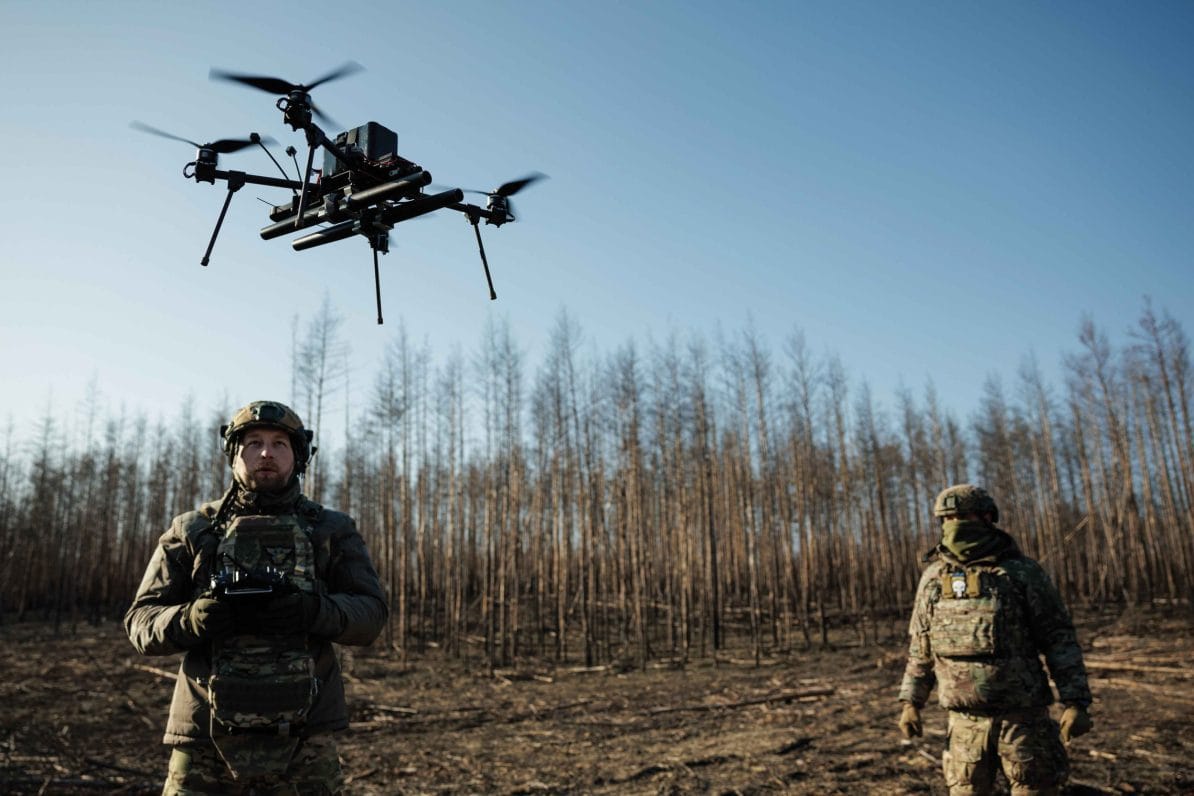
A Ukrainian soldier tests a drone in February 2025. Photo: Global Images Ukraine
24th February 2025 (published Jul 2025) (Taken from: #58)
Why did what was supposed to be a three-day blitzkrieg by Russia turn into such a long war?
Serhii Plokhy: On the Russian side the war is still known as a ‘special military operation’. It was envisioned as a continuation of what happened in Ukraine in 2014 with the annexation of Crimea, which was a classic colonial operation, an empire exerting control over what it sees as one of its provinces. But then it turned out that Ukraine is not the province of an empire but a real country, with an army and a president who wouldn’t run away. And that came as a big surprise, not only to Putin, but also to the western governments who had withdrawn their embassies from Kyiv in the run-up to the invasion as they believed the city would fall.
Is the conflict changing the nature of war itself?
SP: This is a 19th century war of empires and nations, with 20th century tactics and 21st century technology. What we’ve seen on the Ukrainian side is a combination of traditional warfare with forms of innovative fighting of the sort that you might have seen in the jungles of Vietnam or in the colonial wars of the past, where one country is disproportionally stronger than another in terms of traditional weapons (↓A). Ukraine, like any partisan unit, has to fight back with whatever it can get. At the heart of this fight are drones.
Drones allow small, dedicated, sophisticated units to defeat a major military force, in the case of Operation Spider’s Web, on 1st June 2025, pitting $2,000 machines against half-billion-dollar airplanes. Ukraine, a country with no navy, defeated the Russian Black Sea Fleet, thanks in part to underwater drones. That is changing the nature of warfare.

How have your feelings about the conflict changed since you published your book The Russo-Ukrainian War in 2023?
SP: If you look at the map of this war, it hasn’t really changed since I finished writing the book. The front lines haven’t really moved, but other things have changed. Ukraine is still standing, but America is falling. I thought Ukrainian resolve would be the major problem if the war continued, but my main concern is not about Ukrainians’ readiness and ability to continue the resistance. It is about the world situation as a whole, particularly the cracks that are forming in the western alliance.
How has Trump’s arrival shifted the international calculus?
SP: What we saw after the full-scale invasion began in 2022 was a rebuilding of the transatlantic alliance of the Cold War era, between the US and Europe. It had seemed until then that there was no purpose for Nato, there were all sorts of questions about it and then the Russian aggression against Ukraine really put the whole thing back together. And the US under Biden was leading in many ways when Europe was reluctant. With the arrival of President Trump what we see is that the isolationist tendency that existed in the US for a long time in the 20th century, particularly in relation to Europe, has become a dominant phenomenon.
Of course, disengagement with Europe and focusing on China and the Pacific was also part of President Obama’s thinking and strategy. So in that sense, while the way he is doing it is very unorthodox, what President Trump is doing is not out of sync with long-term trends. But at a minimum, the US is now an unreliable partner. Even if the Trump administration’s policy changes tomorrow, the lesson of the last half a year is that it is a realistic scenario that the US could pack up and leave the European stage, or at least be indecisive, with different factions advocating and trying different policies, meaning there would be no one policy that you can count on for years.
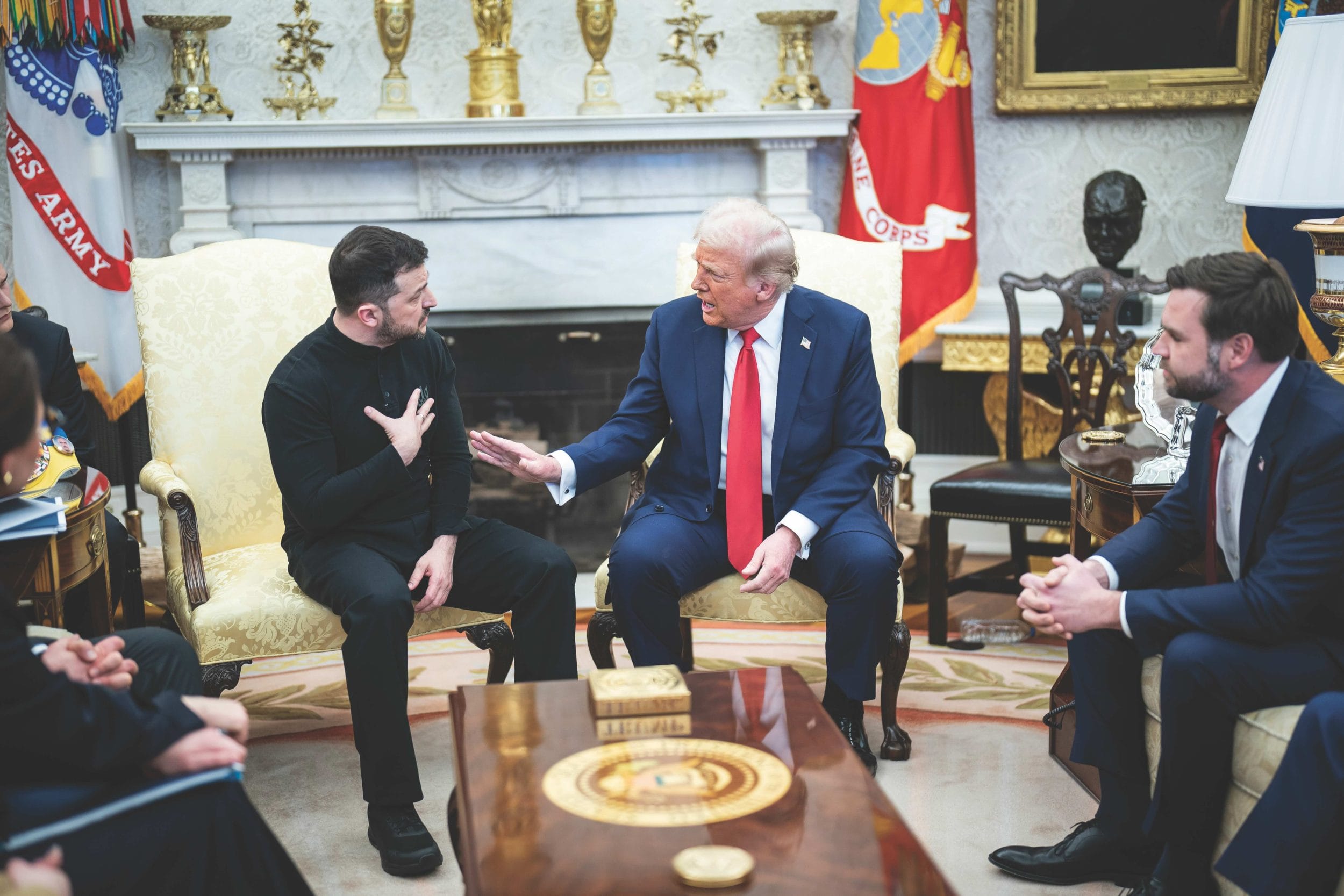
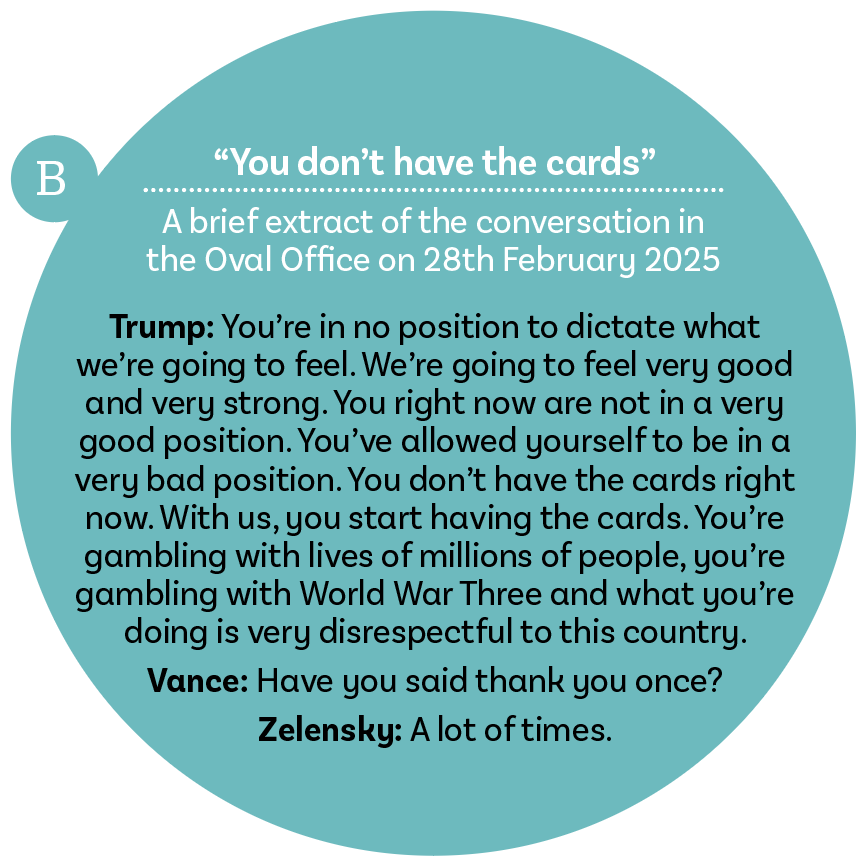
We had a graphic demonstration of that unreliability on 28th February, when Volodymyr Zelensky was humiliated in the Oval Office…
SP: When I first watched that confrontation in the Oval Office (↓B), I also believed that Zelensky was humiliated. As I look at it now, however, my perspective has changed, partly because of the policies adopted by Zelensky after the event, who changed his tune and his tactics. Clearly, what happened in the Oval Office was a strategic miscalculation on the part of Zelensky. But looking at it historically, the biggest loser in that entire story wasn’t Zelensky – the person who actually humiliated himself was President Trump.
How important has Zelensky’s character been in maintaining Ukrainian resolve?
SP: He has turned out to be an exceptionally strong war leader. And that leadership continues despite the fact that circumstances change. The big question is to what degree the tactics adopted by Ukraine can change the dynamics in the US.
Have nuclear weapons affected the conflict?
SP: It is my belief that the current war would not have happened without the Budapest Memorandum of 1994 [in which the US, UK and Russia give security assurances to Ukraine and it agreed in return to give up its nuclear arsenal, then the third biggest in the world]. The war would also probably have been over by now if the west had not been concerned about Russia’s nuclear threats, particularly in the autumn of 2022. The Russian front was crumbling and falling apart at that time and Zelensky requested the tools needed to finish the job. The west gave all sorts of excuses – reasons why Ukrainians can’t fly F-16s, why it’s the wrong thing to provide them this or that weapons system. I believe the real concern was that if Ukraine was provided with what it wanted, it could take back Crimea and the Russians might drop a nuclear weapon in response. The Russian nuclear threats worked.
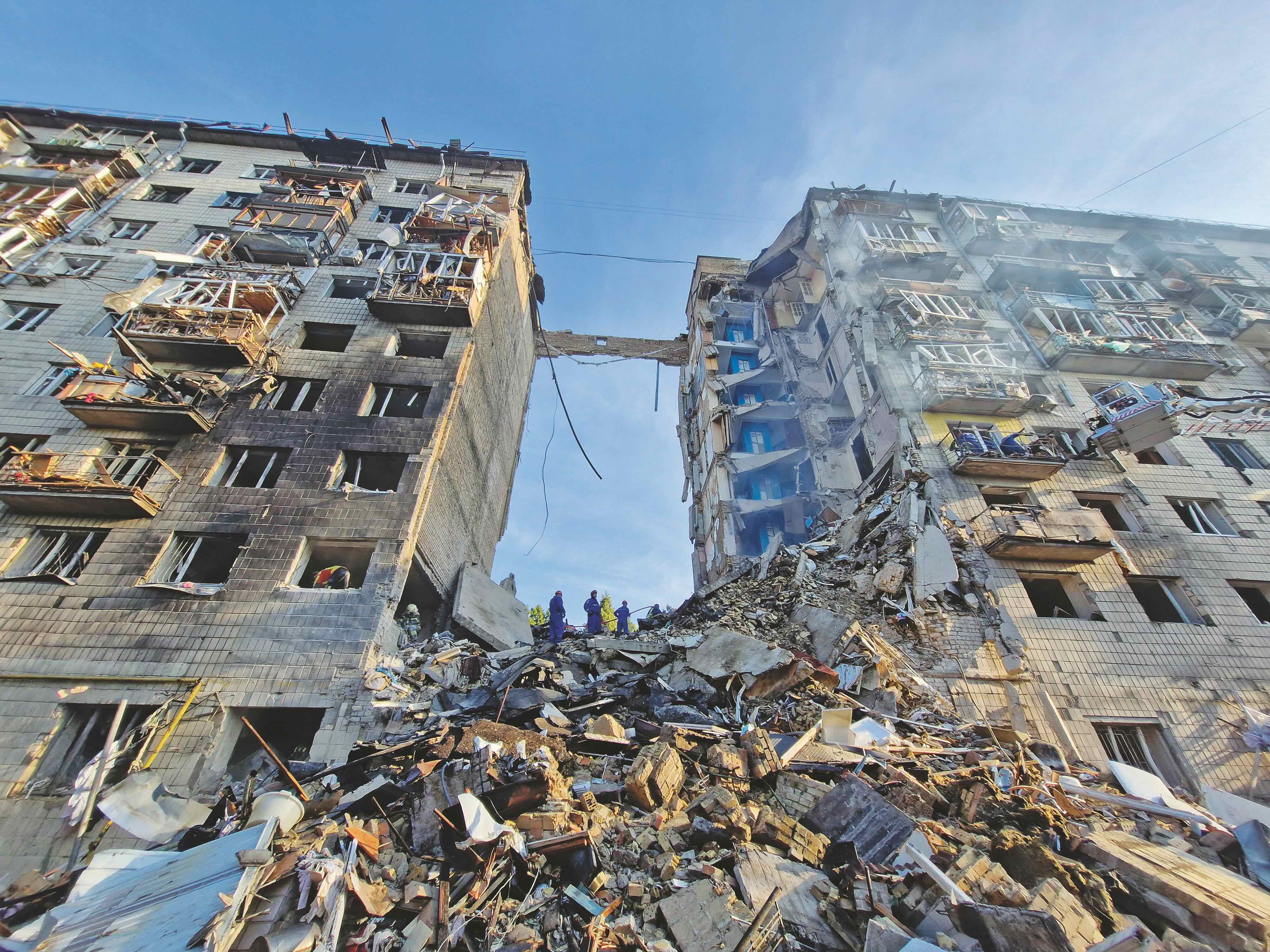
Those threats have continued, not least with Russian use of an Oreshnik ballistic missile against Dnipro in November 2024…
SP: Yes, that’s the missile specifically designed for delivering nuclear bombs. Oreshnik was used to intimidate the Ukrainians and the world; its use was a veiled threat of the use of nuclear weapons.
What has the war done to hopes for nuclear non-proliferation?
SP: It has been a huge blow. Think what lesson leaders have learned looking at Ukraine giving up nuclear weapons and then being attacked – and then seeing its allies sitting on the fence, because if you support Ukraine too much you risk a nuclear confrontation. It would now be difficult for any responsible leader of any state to give up nuclear weapons or a nuclear weapons programme.
Today, we have at least 40 countries that can acquire nuclear weapons within a very short period of time. Nuclear weapons are not a new technology any more. They are expensive, but if countries like North Korea can acquire them, they’re not as prohibitively expensive as they used to be. So all these countries are watching what is happening in the war and if Russia uses nuclear weapons I believe they will become sprinters, racing to try to get nuclear weapons as soon as possible.
The nuclear threat has also been from the takeover of Ukrainian nuclear plants such as Zaporizhia, captured in 2022 and the scene of fighting on several occasions. How close to disaster did we come at Zaporizhia?
SP: For the first time at Zaporizhia, in March 2022, we had warfare taking place at a nuclear power station. The reactor had been shut down but it was still overheating and fire was being exchanged, missiles being launched. One of the buildings caught alight. It was being broadcast on YouTube channels, and people in the industry were watching events in real time and exchanging views. At one point, instead of just sharing their professional opinions of what could be done, the conversation suddenly changed and became religious. These were nuclear engineers and operators, and for 15 or 20 minutes they were having a religious discourse – ‘Mother of God, save us’. The technology and science was of no help any more.
We got the accidents at Fukushima [in Japan in 2011], Chernobyl and the Windscale [the UK’s worst nuclear accident, in 1957, when a fire took hold of a reactor for three days] without war. Now think about the operator looking out of a window at a tank firing shells and trying to run a reactor at the same time. If this is not a recipe for a version of nuclear armageddon, I don’t know what is.
This is a war of the disintegration of an empire, and we know where that leads in the long term… The states that emerge from their ruins eventually establish themselves”
What are the implications of such events for nuclear power?
SP: It’s a major warning. Across the world we are on the verge of going through a renaissance of nuclear power. Everyone is talking about that, with modular reactors and so on. But every nuclear reactor is a potential dirty bomb. What’s more, Operation Spider’s Web has demonstrated that Ukraine has capabilities of hitting Russian nuclear reactors. In 2024 when it invaded the Kursk region of Russia, Ukraine was approaching the Kursk nuclear power plant. So we are in uncharted waters in that sense. And what concerns me the most is that there is no dialogue. There is one group that says, ‘We have to save the environment by developing nuclear power’ and another, much smaller group that says ‘nuclear energy is dangerous, it’s one step from the development of nuclear weapons and turning conventional war into nuclear war’. These two discourses exist completely separately.
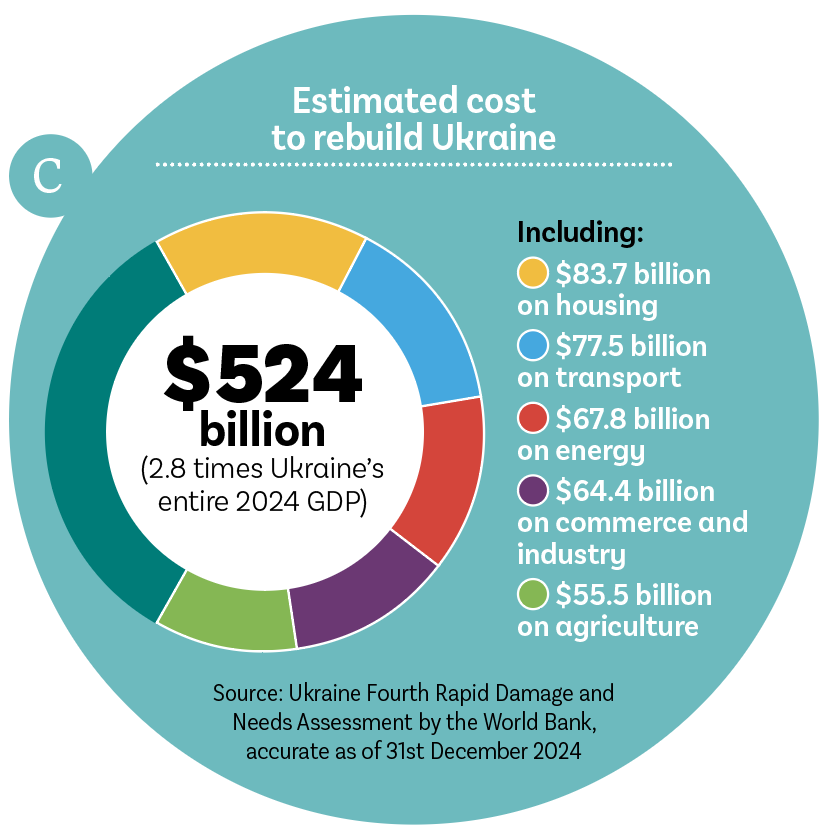
What would it take to rebuild Ukraine, not just physically (↑C), but also to reincorporate millions of traumatised displaced people?
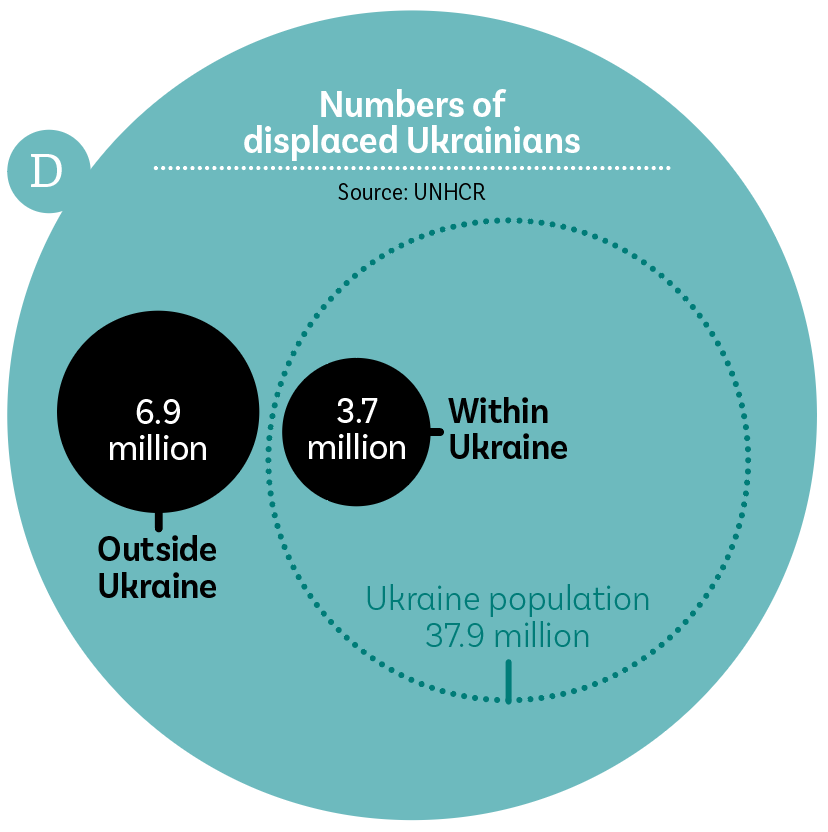
SP: The longer the war goes on the more difficult this task will be. A lot will depend on how secure a place Ukraine will be afterwards, because no money will come to rebuild if there is no secure arrangement. And people will not return to Ukraine from other countries (↓D) if there is no money to rebuild. The longer the war goes on, the more likely Ukraine is to become a sort of diaspora nation.
Where do you see things going from here?
SP: I think a lot about this war, and have written a lot about it as a historian. So my vision is long term, and it’s maybe not very helpful in terms of immediate developments and conclusions, but this is a war of the disintegration of an empire and we know where that leads in the long term. Empires transform. The states that emerge from their ruins eventually establish themselves. Putin’s mantra is that Ukrainians and Russians are the same people, which means Ukrainians don’t exist. In his scheme there is no place for a separate Ukrainian language, culture or identity… But whether the war ends this year, next year or in five years, the sense of Ukrainian identity and its separateness from Russia has been established for good.
Serhii Plokhy is the author of ‘The Russo-Ukrainian War’, published by Penguin
Slow Journalism in your inbox, plus infographics, offers and more: sign up for the free DG newsletter. Sign me up
Thanks for signing up.