Day one: Executive order 14157
Donald Trump’s promises to bypass Congress and take major executive action on the first day of his new presidency were a common refrain on the campaign trail, including a pledge to “be a dictator” on that day alone. And on 20th January he delivered shock and awe, signing a record 26 executive orders at the Oval Office and in front of supporters at a sports arena. Months later, the effects of that dizzying slew of signatures are still being felt. Here is the second of five interviews with Americans who are living with the impact of first-day executive orders
20th January 2025 (Taken from: #58)
This is the second in a five-part series about the impact of Donald Trump’s first-day executive orders, published in issue 58 of Delayed Gratification. It covers an executive order on designating foreign terror organisations.
Executive order 14157
“Designating Cartels and Other Organizations as Foreign Terrorist Organizations and Specially Designated Global Terrorists”
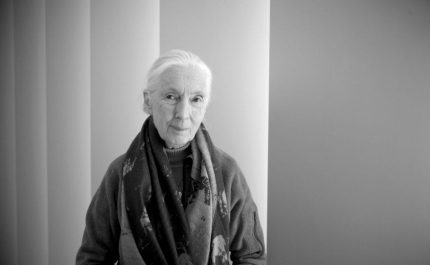
Melissa Shepard, director of legal services at Immigrant Defenders Law Center
In his inaugural address on 20th January, Donald Trump said he would use the “full and immense power of federal and state law enforcement to eliminate the presence of all foreign gangs and criminal networks bringing devastating crime to US soil”. Later that day he widened such power by changing the designation of a series of gangs, including Venezuelan outfit Tren de Aragua (TdA), reclassifying them from transnational criminal organisations to foreign terrorist organisations. “They’re killing 250,000 to 300,000 people [in the US] a year,” the president said of the gangs as he signed executive order 14157, a claim which was swiftly debunked by fact-checkers at the Washington Post.
The new terror designation helped the administration justify its move to invoke the 1798 Alien Enemies Act, a law that allows the deportation without due process of any non-citizen from a country with which the US is at war (the president alleges that gangs are “conducting irregular warfare” against the country). It has only been invoked three times before, all during times of conflict. Melissa Shepard, the director of legal services at the Immigrant Defenders Law Center (Immdef) in Los Angeles, says that Trump’s plan to use a 227-year-old act against alleged gang members was seen by immigration lawyers as “a tactic to be able to disappear people as quickly as possible.”
TdA had been identified by Trump as a key initial target of the new mass deportation strategy in October 2024 while he was campaigning in Aurora, Colorado. For weeks rumours had circulated that members of TdA had taken over apartment complexes in the city and were wreaking havoc. Although the city’s Republican mayor had debunked many of the claims, Trump declared that migrant gangs had “invaded and conquered” Aurora – and posing against a backdrop of mugshots of men he described as “illegal immigrant gang members”, he had proposed his solution of invoking the Alien Enemies Act.
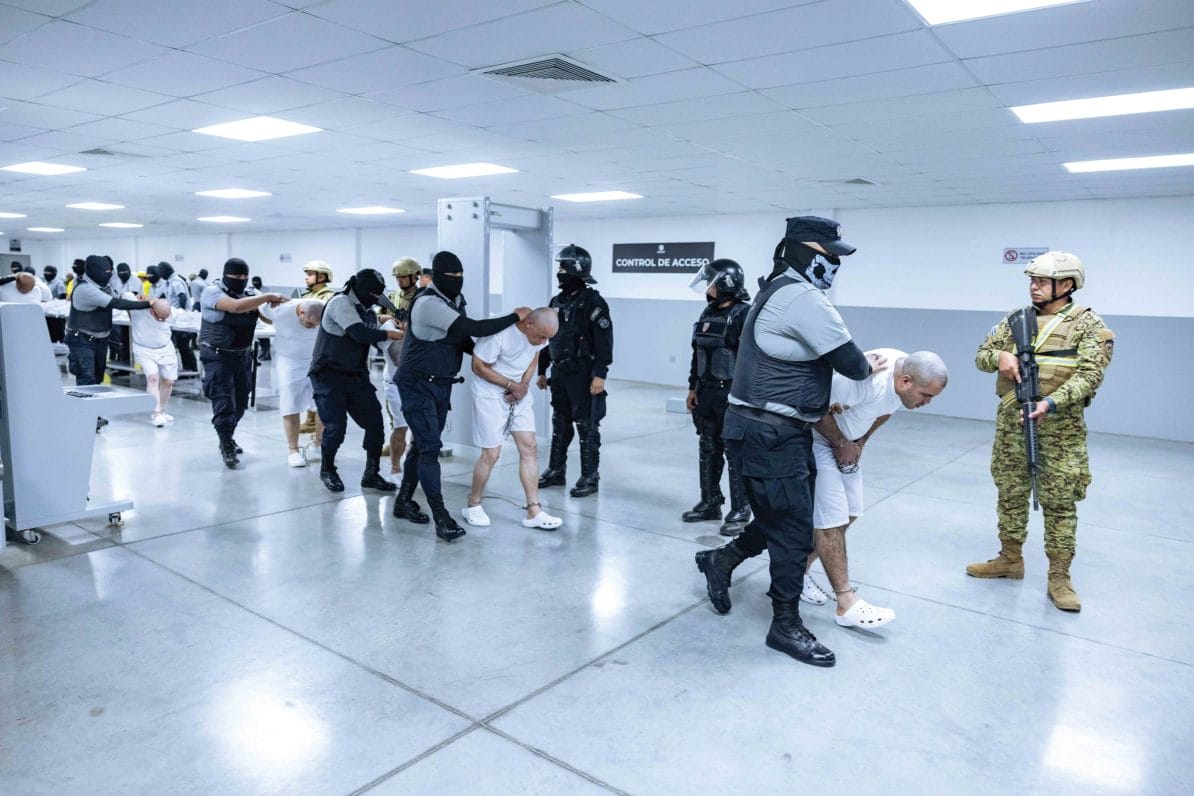
Although Trump overstated TdA’s impact in Aurora – and its terror designation is disputed by analysts, who say that its motivation is money rather than ideology – the group has been linked to crimes in several US states. It was formed in a Venezuelan prison in 2014 but soon expanded into several other Latin American countries, where its focus is human trafficking, sex trafficking and drug smuggling. With TdA now placed in the same category as Isis and Boko Haram, on 15th March 2025 the president signed an executive order to invoke the Alien Enemies Act – and 261 alleged gang members were rapidly put on deportation flights to El Salvador. Among them were eight men represented by Immdef, including Andry Hernández Romero.
Hernández Romero is an openly gay makeup artist who, according to Shepard, fled Venezuela because of persecution due to his sexual orientation and political beliefs. He left his hometown in May 2024, survived the perilous journey through the Darién Gap jungle, and surrendered himself at the US border three months later. He had dreams of opening a beauty salon in the US and financially supporting his parents. From the Otay Mesa detention centre in San Diego, Hernández Romero pursued an asylum claim. He followed all the rules, says Shepard, passed a credible fear interview (a preliminary screening) and had a strong case – but was sent to El Salvador and hasn’t been heard from since.
Hernández Romero’s lawyers only know he was sent to El Salvador’s notorious Terrorism Confinement Center (Cecot) because he appeared in photos taken by Time magazine photographer Philip Holsinger, who toured the maximum-security mega-prison shortly after the deportees arrived. Holsinger said he saw the 32-year-old shouting “I’m innocent” and “I’m gay” while guards forcibly shaved his head. “He was being slapped every time he would speak up… He started praying and calling out, literally crying for his mother,” the photographer told CBS.
“Beyond [Holsinger’s testimony] we have not been able to get further information on him. Cecot is a black hole. There’s no way to get messages in or out, and as one of El Salvador’s officials famously said ‘the only way out is in a coffin’,” says Shepard, quoting justice minister Gustavo Villatoro in 2023.
Like most of the men on the deportation flights, Hernández Romero has no criminal record in Venezuela or the US. And despite the government’s insistence that every deportee to El Salvador is a member of TdA, he has no clear, documented links to the group – very few of the deportees do. The government says it’s done its due diligence and that crown tattoos on Hernández Romero’s wrist prove his affiliation to the gang; his lawyers and family insist he has nothing to do with them. “They are crown tattoos with the words ‘Mom’ and ‘Dad’ written underneath them,” explains Shepard. “His tattoos are artistic, things like flowers, and if he’d been given the opportunity to explain the meaning behind the crowns it would have made perfect sense. They are a homage to his hometown.”
In the Venezuelan town of Capacho, where many residents get crown tattoos to commemorate its famous Three Kings Day festival, Hernández Romero’s parents wait for news. “We’re in touch with them… and they’re devastated,” says Shepard. “He’s a humble, generous person who’s very involved in the community and close to his family, so his disappearance has been extraordinarily difficult.”
In late May a San Diego immigration judge dismissed Hernández Romero’s asylum claim, threatening to sever any remaining ties he has to the US legal system. “We will most likely appeal,” says Shepard, who argues that Hernández Romero’s rights to due process were clearly infringed by being prevented from attending his own hearing. In a separate legal action Hernández Romero is the lead plaintiff in a lawsuit filed by nonprofit rights groups the American Civil Liberties Union and Democracy Forward to block deportation flights under the Alien Enemies Act. When it was originally filed on 15th March a federal district judge, James Boasberg, temporarily blocked the El Salvador deportations. They went ahead anyway, and the White House and the judiciary have since been locked in a dispute over whether the former disregarded the ruling of the latter. Shepard says the White House’s alleged defiance of court orders is just one example of the administration “pushing the boundaries of the rule of law.”
The Trump administration has certainly pushed boundaries when it comes to finding places to which to deport migrants. As well as the more than 200 alleged gang members sent to Cecot, there are around 500 deportees being held at the US Navy base at Guantánamo Bay in Cuba. The government also attempted to deport a group of migrants convicted of violent crimes to South Sudan, which according to the UN is sliding towards civil war. The group, which contains migrants from countries including Mexico, Cuba and Vietnam, was left in limbo at a US base in Djibouti after a federal court challenged the legality of the deportations, but on 23rd June the US supreme court sided with the White House and ruled that migrants could be deported to third-party countries to which they have no connection.
One hundred days after the deportation flights, Shepard does not know for sure that Hernández Romero and her other seven clients at Cecot are alive. When homeland security secretary Kristi Noem was asked at a congressional hearing in May if she could request a proof-of-life check on Hernández Romero for the sake of his mother in Venezuela, she refused. Shepard has never experienced anything like this in her legal career. “It’s highly unusual for a client to be disappeared,” she says.
The scope of the challenge facing Shepard and her colleagues is unprecedented, she says. Immdef’s head office is in downtown Los Angeles, and at the time of our interview thousands of National Guard troops and Marines are patrolling the nearby streets, sent by the president to quell protests over sweeping immigration raids. Tensions are high, people are scared, the workload is through the roof, and Shepard accuses the government of making it increasingly difficult for undocumented migrants swept up in the raids to have access to legal representation.
Yet in the midst of this crisis came some good news. One of the migrants deported to El Salvador had been sent due to an administrative error, and for several weeks afterwards the US government had claimed that it was impossible to bring Kilmar Ábrego García back to the country. The supreme court ordered the White House to facilitate the Salvadorian’s return, and in June he was finally flown back to the US where he faces trafficking charges described by his lawyers as “preposterous”. “The administration had claimed that they don’t have the authority or jurisdiction to return any of these folks [deported to El Salvador],” says Shepard. “The fact that Kilmar was returned shows that they can.”
Shepard still believes that Hernández Romero could get out of Cecot alive. There is, in fact, a way out that isn’t in a coffin. “The fact that Ábrego García was brought back is cause for hope,” she says.
Part one in this series, about executive orders focusing on DEI and Doge, can be read here.
Slow Journalism in your inbox, plus infographics, offers and more: sign up for the free DG newsletter. Sign me up
Thanks for signing up.