Putting the boot in
In November 2024, Jamaica’s athletics governing body turned down a big-money offer from Adidas, opting to stay loyal to Puma. It was the latest skirmish in an epic battle between the two German flagship brands that began with a fraternal row nearly 80 years ago. Duncan Craig travels to the Bavarian town of Herzogenaurach, still home to both companies, to discover the roots of history’s greatest sportswear rivalry
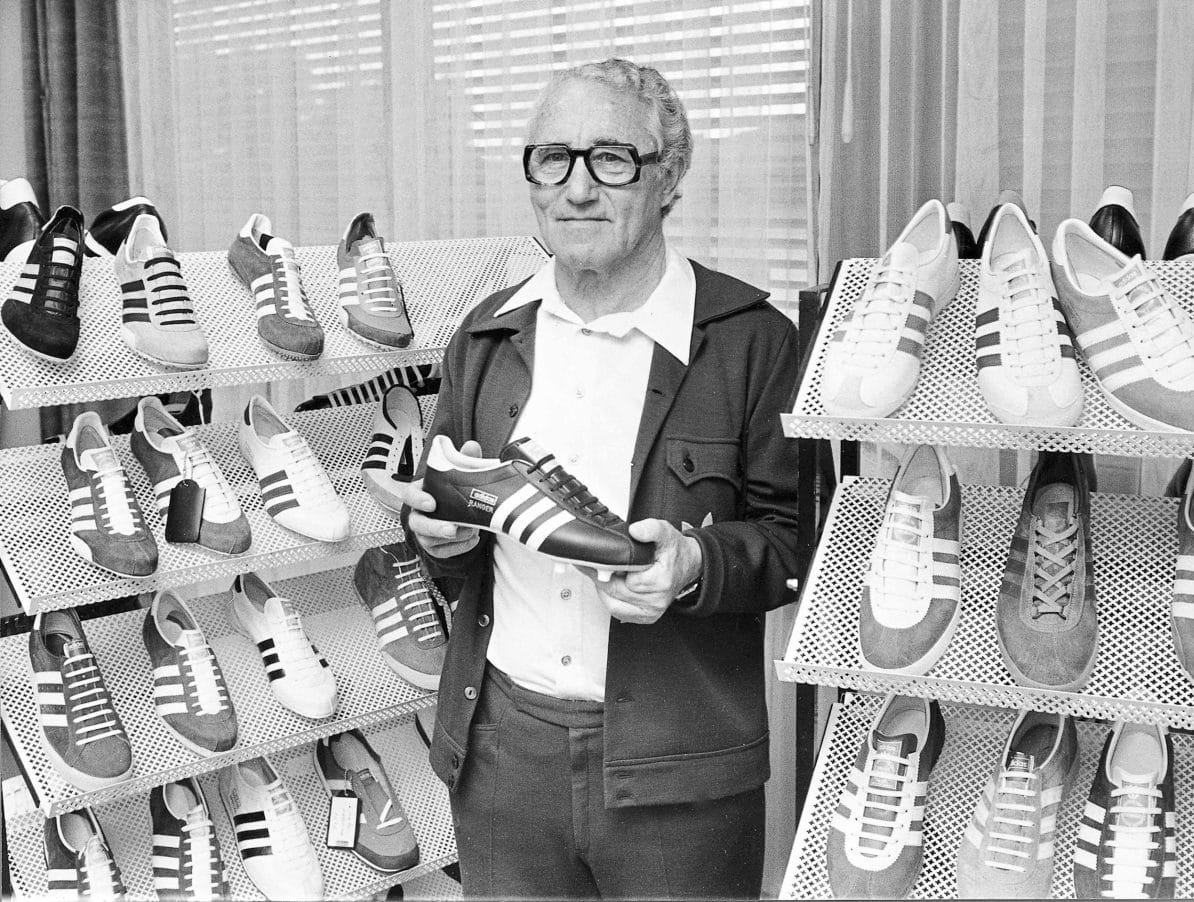
Adolf 'Adi' Dassler pictured in 1978. Photo: Getty Images
Over the past 20 years the tiny Caribbean nation of Jamaica has dominated sprinting with a hegemonic swagger, accruing a mountain of medals and flurries of world records. In Asafa Powell, Yohan Blake, Kishane Thompson, Shelly-Ann Fraser-Pryce and the peerless Usain Bolt, the country has boasted some of the most compelling and charismatic athletes of the century.
Throughout it all, Puma’s distinctive leaping cat logo has bounded across the athletes’ vests. Partnering with the Jamaica Athletics Administrative Association (JAAA) and the Jamaica Olympic Association (JOA) in 2002 has proved an astonishingly astute piece of marketing for the German sportswear giant. And it’s a relationship that Puma’s rivals – and one in particular – jealously covet.
When the deal to supply the Jamaican athletics team’s kit was last up for renewal a decade ago, Adidas tried in vain to wrestle it from Puma. And as the Olympic year of 2024 drew to a close, they had another go. A big-money offer was tabled, then increased. Royalties and cash incentives were promised. And then, on 13th November, having flashed a little ankle, the JAAA announced it was re-signing with Puma. The leaping cat had once again got the cream, and Adidas was forced to skulk off, licking its wounds.
It was a defeat that stung all the more, given the history between the two brands. For decades they have been engrossed in a vitriolic rivalry driven by a fraternal rift of Shakespearean proportions. At its centre lie two brothers – Adolf ‘Adi’ Dassler, founder of Adidas, and his older sibling Rudolf or ‘Rudi’, head of Puma.
Today the two brands have a combined annual revenue of £26 billion, higher than the GDP of nearly 80 countries. Together they employ some 80,000 staff, produce close to 1.3 million shoes a day and identify as lifestyle brands as much as they do sporting ones – but the rivalry persists. The story begins a century ago with the establishment of the Gebrüder Dassler Schuhfabrik (Dassler Brothers Shoe Factory) – ‘Geda’ for short – in the laundry room of the family home in Herzogenaurach, Bavaria, in 1924.

A worker at the Adidas factory in Herzogenaurach, Germany in 1988
The town of bent necks
Set in the picturesque Aurach valley, Herzogenaurach, ‘Herzo’ for short, is a calm, ordered confluence of cobbled alleyways and half-timbered houses. It is also home to a simmering psychodrama that has swirled around its streets for much of the past century.
Strolling around, you find your eyes inexorably drawn to people’s footwear. The “town of bent necks” is the epithet you’ll often hear. Julie Kähler, a UK-born resident who offers tours themed on the feuding companies, wears one Puma shoe and one Adidas; it’s a gimmick, but one rooted in realpolitik.
Whereas once it would have been unthinkable for staff to switch companies, today it’s less taboo. Puma’s inspirational Norwegian CEO Bjørn Gulden’s high-profile move to Adidas in late 2022 saw to that. But unwritten rules remain: one new Puma employee I speak to is in the midst of selling all her three-stripes gear from her time at Adidas. “It would be seen as a major faux pas to keep it,” she tells me. “Perhaps even worse.”
In a prominent spot on Herzo’s Hauptstraße, tucked between the town’s twin medieval watchtowers, stands a wine shop run by Michael Dassler, Rudi’s grandson. It’s a refined sort of place, with high stools tucked into softly lit tables and bottle-lined shelves. The tall, neatly dressed 59-year-old recalls joining team Puma as a boy, as it decamped en masse to Munich in 1972 to better exploit the commercial opportunities of the Olympics. He remembers going to Wimbledon in 1986 to see Boris Becker, Puma’s teenage prodigy, win his second successive title. Mostly, though, he remembers the festering enmity. “Adidas was definitely not mentioned in our home. It was like Voldemort; the name is not spoken,” he says. Would he ever wear Adidas? “Never. No way.”
In Herzo, reminders of the brands – and their dispute – are everywhere. In the courtyard of the town’s Rathaus, I find a fountain depicting an avuncular cobbler hard at work, backed by a sculpture of children engaged in a tug of war. They lean back, straining for purchase. On their feet, so subtle you miss it at first, are Adidas shoes on one side, Puma the other.
The house where it all began still stands, its cream facade enlivened by burgundy shutters and its roof pinched into conical turrets. Here, in the annexe used by their mother, Pauline, for her makeshift laundry business, the brothers first started to make shoes, and swiftly began to make a name for themselves. But it didn’t take long for their conflicting personalities to clash: Adi, the quiet visionary with a flair for innovation and a sportsman’s obsession with marginal gains. Rudi, the gregarious salesman with a volatile temperament and penchant for conflict.
The more conciliatory Adi lavished the same attention on friendships that he did on his prototypes and it was one such bond – with Josef Waitzer, coach of the German athletics team – that was to give Geda its big break. The younger brother’s relationship with Waitzer, with whom he’d jog in the forests around Herzo, granted the brothers track-side access to Germany’s elite athletes and enabled Adi, in 1936, to get close enough to a young Alabaman sprinter to present him with some custom-made Geda lightweight leather spikes. With gold medals in the 100m, 200m, long jump and relay at the Berlin Olympics that year, Jesse Owens repaid Adi’s boldness many times over.
The inevitable split finally came in 1948. Rudi left and set up on the other side of the Aurach river. Geda was no more, Puma and Adidas were born”
By the mid-1930s, the brothers and their respective families were ensconced in a three-storey home they’d built opposite their new factory. The Villa, as it was known locally, was spacious by the standards of inter-war Germany but must have felt anything but. The brothers’ parents had the top floor. Rudi, with his wife Friedl and young son Armin, was in the middle. Adi and his wife Käthe occupied ground level with their first child, Horst. The wives were as ill-matched as their spouses: Friedl, compliant and dutiful; Käthe bold and self-assured. “Interfering” was Rudi’s blunt assessment. “The domestic situation must have been pretty unpleasant,” says Kähler, who worked in the now-demolished Villa teaching English to Adidas employees when she first moved to Herzo in the late 1990s.
When Rudi was drafted to the Eastern Front in 1943, Adi – judged to be indispensable to the business – remained in Herzo. Rudi became paranoid. Was his younger brother squeezing him out? Such suspicions were seemingly confirmed when Rudi was detained by the Allies after the war, accused of having fought in the SS – both Rudi and Adi were members of the Nazi party – with an interrogating officer telling him he’d been denounced by a family member. “I don’t think it was Adi,” argues Kähler. “It just doesn’t seem to fit his personality. He just wanted to make shoes. Having Rudi there was good for the company. Grievances aside, they were a good team.”
The inevitable split came in 1948. Rudi left and set up on the other side of the Aurach river. Assets were crudely divided; Geda was no more, Puma and Adidas were born. And Herzo found itself cleft in two, with residents – increasingly reliant on the expanding firms for employment – forced to pick a side. An iron curtain had descended, defined by the steely waters of the Aurach.
Stars in stripes
Today, the companies’ HQs sit on the northeastern edge of town, on tauntingly adjacent plots. Adidas’ World of Sports is a former US Army base given a €1 billion facelift. Buildings dotted around the 59-hectare site have names like ‘Spikes’ and ‘Laces’. Youthful employees come and go, their only uniform die drei streifen (three stripes), in infinite variations on their feet. A broad walkway is inlaid with the footprints of Adidas’ constellation of stars. A Dick Fosbury here, a Billie Jean-King and a Siya Kolisi there. Lionel Messi’s are satisfyingly dinky.
Adidas’ dominance over its rival began early, as did the allegations of foul play: grumblings that Geda’s assets weren’t split equally and that the innovative Adidas boots with the screw-in studs that helped the German football team beat the seemingly invincible Hungarians in the Miracle of Bern in 1954 to win the World Cup in Switzerland were actually a Puma invention. Two years later, at the Olympics in Melbourne, there were rumours of customs officials being bribed to delay shipments of Puma spikes.
The 1968 Olympics in Mexico City was perhaps the nadir of the rift. ‘Shamateurism’ was at its peak. Olympic athletes, still prohibited from taking money, would form lengthy queues outside both companies’ tents in the athletes’ village to receive ‘loans’. Underhand approaches, stuffed envelopes, double-crossing and gazumping of athletes were all rife, according to an excoriating report by Sports Illustrated the following year which pictured Puma and Adidas spikes buried in a mound of silver coins on its cover.
The defining image of the ’68 Games, of course, is Tommie Smith and John Carlos’ gloved fists raised in a Black Power salute. The sprinters were unshod, symbolising the poverty of marginalised African-Americans. Placed neatly on the podium alongside them were their Puma shoes. And while Bob Beamon’s epochal, gravity-escaping 8.90m long jump – still an Olympic record 57 years on – may have been performed in the three stripes of Adidas, by the time it came to his medal ceremony he was clad in Pumas, his tracksuit bottoms helpfully pulled up to the knee.
The pre-Games ‘brush spikes’ controversy had set the tone. The move from cinder to synthetic tracks drove the need for a new breed of running spikes. Puma’s response was the Tahoe, whose 68 spikes, each 4mm in length and placed in six rows on the forefoot, gave the impression of a brush. They proved devastatingly effective at the US Olympic trials in California, with both the men’s 200m and 400m world records falling. This panicked Adi Dassler and his son Horst, a growing force in the company who had committed wholeheartedly to the grudge. Horst used his assiduously groomed contacts in the International Olympic Committee to have the new spikes banned. The justification? “Too dangerous”.
Cat power
“Palpable nonsense,” says Helmut Fischer of the cited reason for the spikes ban, handing me a pair of the shoes to confirm as much when I visit him at the PumaVision headquarters. Dressed in a black Puma tracksuit, with the squat powerful build of Diego Maradona (a one-time friend), 79-year-old Fischer, the company’s senior advisor, is an institution. Over 45 years he’s seen it all.
The pick of his extensive collection of Puma memorabilia is displayed in glass cabinets on the Bridge, the walkway that links the HQ’s two main buildings. Without the commercial clout of Adidas, Puma had to be more discerning: hand-picking totemic athletes rather than saturating the sporting ranks with their products. They often went for charisma and marketability as much as sporting prowess – and the Bridge is testament to a Midas touch.
Becker’s Puma racket is there. Linford Christie’s spikes from his 1992 Barcelona Olympics triumph sit alongside a little screw-top case containing the Puma logo contact lenses the British sprinter wore to a press conference ahead of the Atlanta Games four years later. And there, perched in a display case, are the Puma Kings made famous by Pelé in an inspired piece of guerrilla marketing at the 1970 World Cup.
Before the quarter-final between Peru and eventual winners Brazil that year, the world’s most famous footballer had knelt down in the centre circle of the Estadio Jalisco in Guadalajara, in Mexico, and tied up his laces with unhurried ease. For some 25 seconds, the 55,000 wilting fans in the stadium and millions of TV viewers around the world watched and waited.
There must have been something a lot more personal. The way that Horst fought Puma was out of balance”
Behind the scenes, Pelé had recently signed a new four-year, $125,000 deal to wear Puma boots. The deal had been struck by Puma in flagrant breach of a gentlemen’s agreement with Adidas not to negotiate with Brazil’s star No 10 for fear of sparking a financially crippling bidding war. Having Pelé slowly tie up his laces pre-match, with the cameraman paid to zoom in as he did, ensured maximum exposure for the boots. Infuriating Adidas was merely a bonus.
At Puma HQ, I ask Fischer for his take on the origins of the Dasslers’ rivalry. A German TV dramatisation – translated as ‘Duel of the Brothers’ – speculates that Rudi had an affair with Adi’s wife Käthe. Was that an additional factor in the multigenerational estrangement?
Fischer ponders the question. “I actually think so, yes,” he says. “The heat couldn’t have come from nowhere. There must have been something a lot more personal. The way that Horst fought Puma was… out of balance.”
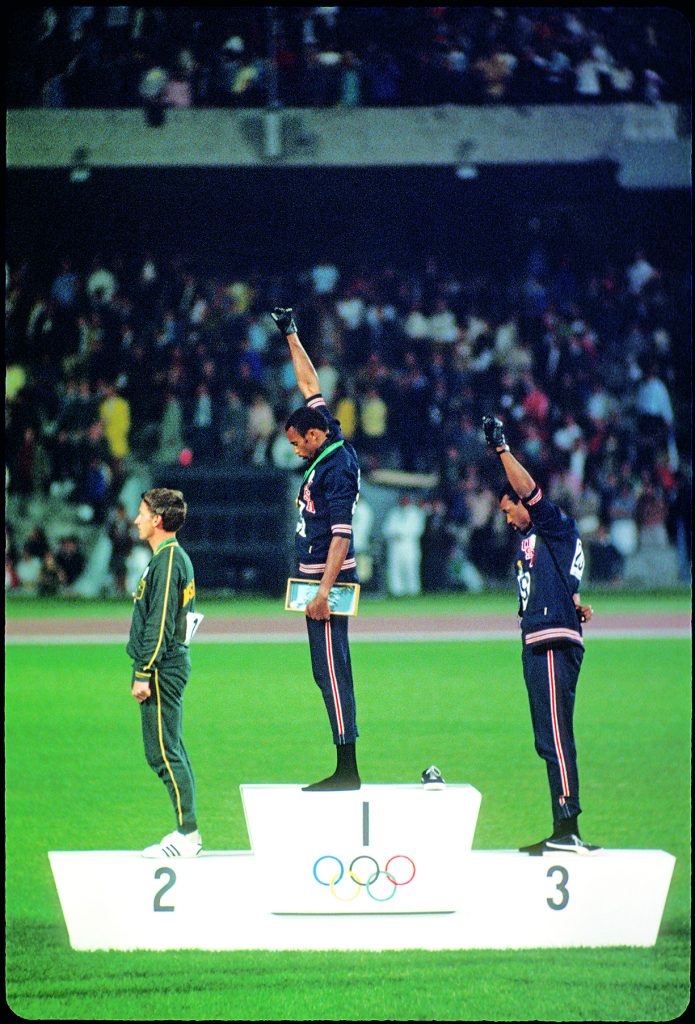
Tommie Smith and John Carlos raise their fists in the ‘Black Power salute’ at the 1968 Olympics, their Puma shoes placed beside them on the podium
Nike heir
In the decades that followed the 1968 Olympics, the fortunes of the two brands ebbed and flowed almost in parallel. Each saw power drain from the increasingly Herzo-anchored founders towards their globally focused eldest sons, with whom they had increasingly strained relationships. Each company flirted with bankruptcy, saw an exodus of Dasslers, went public and was ultimately resurrected by dynamic CEOs unencumbered by petty family politics. And each – consumed by their obsession with one another – fatally underestimated the threat of rival brands. Specifically a feistily ambitious start-up from Portland, Oregon. ‘Dimension Six’ was the proposed name of that company. But Stanford Business School graduate Phil Knight and his partner Bill Bowerman, coach of the US athletics team, were persuaded at the last moment to change it to a deity from Greek mythology personifying victory. And so, in 1971, Nike was born.
The “home” Olympics of Munich in 1972 could be viewed as a high-water mark for Adidas. The sportswear as well as footwear markets were exploding and Adidas tracksuits and shoes were estimated to have been worn by as many as 80 percent of the athletes at that Games. But like a bend specialist in an inside lane, Nike was already gaining ground – and in the 1980s it was to open up a Boltian lead on the two German frontrunners that it would never relinquish. Today, its annual global revenue tops £40 billion, more than twice that of Adidas and five times that of Puma.
Increasingly cantankerous and estranged from family members as well as one another, the founding fathers passed away within four years of one another in the 1970s. Rudi, of lung cancer in 1974; Adi, from heart failure, in 1978. Neither lived to see their beloved brands brought to the brink, blighted by mismanagement, ill-fortune and cripplingly gargantuan endorsement deals that their rivalry had done so much to facilitate. Nor to witness the respective comebacks.
The brothers would surely struggle to comprehend the landscape of 2024. “Tastemakers” rather than centre-forwards are wooed – three of Puma’s biggest signings of late have little to do with sport: Selena Gomez, Dua Lipa and Rihanna. Biodegradable shoes, high fashion, NFTs and the metaverse are some of the new battlegrounds.
Relations between their two companies have thawed somewhat. A football match between the businesses in 2009 was felt to be a turning point – the first joint initiative since the split in 1948. Overall, the mood these days is one of superficial cordiality: divorcees who can make it through the kids’ nativity play together.
All these years on, Michael Dassler is philosophical about the decades of family feuding. “Growing up, it was always ‘the other side are the bad guys and we’re the good guys’,” he says. “But I suppose my family weren’t the good guys all the time…” He discounts rumours that Adi and Rudi met one final time before their deaths. “Whatever happened between the two of them, it must have been deeply personal. The rivalry [between his father, Armin, and Horst] was huge. But it wasn’t as bad as with the two old guys.”
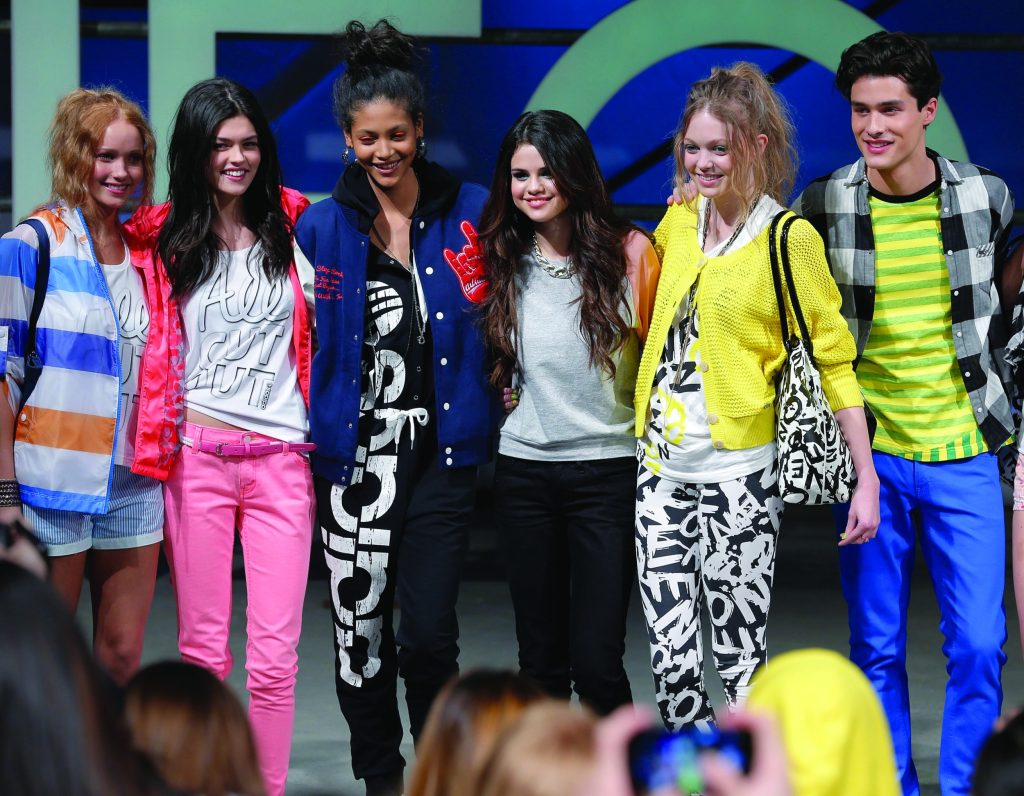
Selena Gomez (third from right) was a brand ambassador for Adidas before Puma paid her a reported $30 million for a two-year deal in 2017
Dead men’s shoes
The two “old guys”, for their part, are buried in the town’s large, neatly-tended cemetery. It’s a crisp, clear evening when I visit, a fiery sunset silhouetting the skeletal trees of winter. Rudi’s grave is near the entrance, with a smattering of flowers and a modest gravestone engraved with an angel. The grander ‘Familie Adi Dassler’ plot, where Adi, Käthe and Horst all lie, is in the very opposite corner. It’s an ostentatious distance away, one that could only be deliberate.
Visiting the graves of the two men, it’s hard not to ponder what could have been. The technical wizardry of Adi, the salesmanship of Rudi, the drive of Horst and Käthe – all pulling in the same direction. No corrosive, distracting rivalry. In a parallel world, perhaps Rihanna would be striding round in Geda trainers today. Perhaps we all would.
There’s a contrary view, of course. One drawn from the pitches, tracks, courts and arenas that provide the backdrop to this story: that of the galvanising power of a bone-deep, festering rivalry. Frazier and Ali; McEnroe and Connors; Rangers and Celtic. Ask any of those whether it ever held them back.
It’s little surprise which camp Linford Christie is in. The British sprinter, now a disconcertingly youthful 64, is synonymous with some of Puma’s biggest moments both on and off the track: his 1992 Olympics 100m victory; the spray-painted white Puma tattoo on that sculpted torso (still his X profile shot); those Puma-logo contact lenses – an ocular successor to the Pelé laces stunt.
With Christie leading the charge, Puma were disruptors before that was a thing. “We always had to stay one step ahead, a bit like sprinting,” he tells me. “I wanted to do whatever I could to get the brand out there.” Rivalry is a subject Christie knows a thing or two about. During his career, he stoked it, thrived on it. Was it the same for the Dasslers, does he think: were their differences the catalyst? “Definitely,” he responds. “Rivalries are a great thing. Rivalries are fun. If they’d just sat back and relied on cornering the market they wouldn’t have got too far.”
Slow Journalism in your inbox, plus infographics, offers and more: sign up for the free DG newsletter. Sign me up
Thanks for signing up.