Annie Nightingale 1940-2024
DJ and producer Martha remembers her friend, pioneering Radio 1 DJ Annie Nightingale
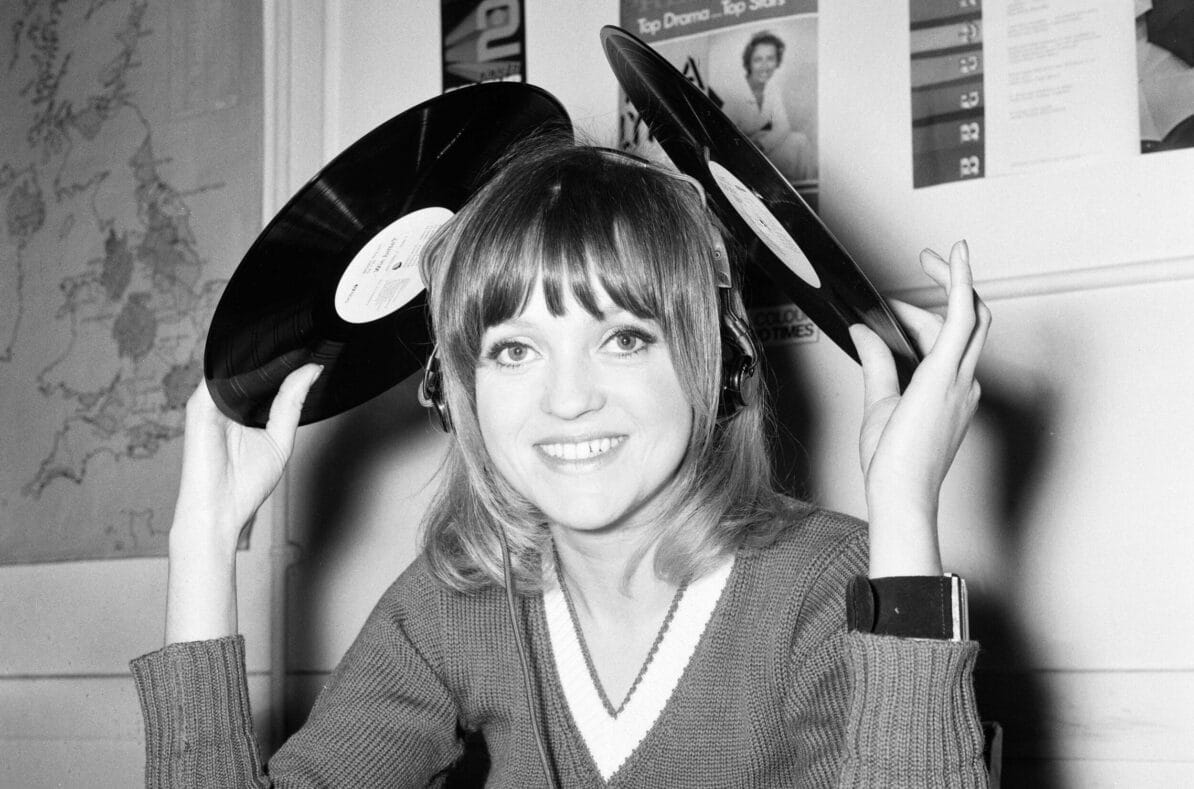
The first Radio 1 female DJ Annie Nightingale at the Cavendish Place studios on 7th January 1970. Photo: Peter Stone/Mirrorpix via Getty Images
11th January 2023 (Taken from: #54)
Annie Nightingale, who died on 11th January 2024 aged 83, was BBC Radio 1’s longest serving DJ. She began her career in local newspapers, only managing to move into radio after years of rejections from BBC bosses, who felt that a woman would alienate the predominantly female listenership. Her shows championed new music, and she was instrumental in introducing acts including David Bowie, Basement Jaxx and Little Simz to a wider audience. Nightingale also appeared on TV, presenting the Old Grey Whistle Test among other shows. She was keen to open the doors that were closed to her for so long, launching the Annie Nightingale Scholarship to “celebrate and elevate talented women in the electronic music scene”. The first recipient of that award, Martha Caidan, remembers her friend, colleague and mentor.
“When I first met Annie in 2016 she’d already lived so many incredible lives. I’d just finished my apprenticeship at Radio 1 and she was in her seventies, but we became great friends, and that relationship was so special to me. She changed my life.
You’d have thought it would be an unusual dynamic – me in my twenties, her approaching 80 – but I never felt the age difference and that’s because Annie was super-interested in people. Even though she had this wealth of knowledge and experience, she didn’t force that on you, she wanted to hear what clubs I was going to, what I was listening to. Your opinion felt very valued in her company. Dance music was my everything, so we were able to bond really quickly, because Annie loved electronic music. She remembered every detail about everything that you told her. She never once forgot my birthday, I think because people were important to her.
Annie changed radio. She was the first woman to DJ on Radio 1 and she broadcast on the station for well over 50 years. Her career is a lesson in consistency, but she was also a revolutionary. When she first applied to become a DJ she was rejected, with bosses telling her that DJs were ‘husband substitutes’ so having a woman on air would alienate the female listeners. My experience of being at Radio 1 couldn’t have been more different. It has been so positive and that’s Annie’s legacy. I don’t have to try and scream to get my voice heard like she would have had to do. She helped change that for all of us and smooth out the path for me and so many other women.
Annie was such a big character in so many people’s lives. She was super-connected with all these musicians, fashion designers and models, but her most important relationship was with her listeners. I started working on her show as the broadcast assistant and worked my way up to being her producer and occasionally sitting in for her as DJ. We were such a good team. She taught me so much about radio, so many special things that you just couldn’t learn anywhere else, and that have shaped the way I present today.
She told me to speak directly to the listener, as if you are talking to just one person. Because radio is so intimate, you are literally whispering in someone’s ear. In fact, before every one of Annie’s shows somebody had to go into the studio and create a kind of fortress of monitors to block her view. She didn’t want to see anyone else, she only wanted to be speaking to the listener. She didn’t want it to be like me and her having a little joke in the studio, because that would exclude the listener; she wanted to be certain that what we were making was for them.
She was also a great interviewer. Without the constraints of having to make a programme of a certain length, Annie would have talked to these artists for days. She would never run out of questions and because she was a good listener as well, more avenues would open up within the interview. The conversation would go off on these amazing, wonderful, delightful little tangents that you could never have predicted.
During the pandemic, I helped with the recording of the audiobook version of her autobiography, [Hey Hi Hello], which was a really special time. Imagine the scene – you get to go around to Annie Nightingale’s house, and she reads you stories from her life.
My favourite Annie story was her Towers Tour. She loved architecture and skyscrapers in particular and she somehow managed to convince the Radio 1 bosses to let her go around the world and broadcast from the top of tall buildings. In 2004 she DJed from the top of the BT Tower, which had been closed to the public since 1981, at something like 5am, as the sun came up in front of her. She made that happen and she taught me that there’s usually a way to make crazy ideas a reality, that there’s nothing wrong with having massive ambitions and with pushing the boundaries.
While recording the book, she talked about how following eclipses was a passion of hers for a while. She would go around the world and witness solar activity just because it was interesting to her. She also DJed in Baghdad in the 80s, at the end of the Iran-Iraq war, and journeyed around India with the Police for a BBC documentary. She travelled a lot and had a very good time, and I really enjoyed listening to her relive it.
Even though she was in her eighties, it was a shock when I heard she had died. Honestly, I’m still shocked six months later. Since lockdown Annie had done her show from home, so it wasn’t like I got to see her all the time. But I think that when it’s a friendship like we had it’s almost like a childhood best friend. You move away, you don’t see each other for ages but you have such a strong bond that when you do you instantly reconnect.
That makes it harder to realise she’s actually gone, that she’s not going to call me up to talk tunes again. There are so many records that make me think of her. She loved rap, particularly Stormzy and Dave, so that definitely reminds me of Annie, all of that and the trap sound. Even new music makes me think of her. She was so passionate about seeking out fresh talent and then supporting the new sounds she’d found. She was doing that until the very end of her life and I’m so happy about that, because that’s all she ever wanted to do.”
Annie Nightingale in her own words…
On her first day at Radio 1: “I was confronted with a bunch of male engineers in the glass booth, waiting if not willing me to fail”
On being on Radio 1 for over 50 years: “I can’t bloody believe it. I thought I’d last a year”
On first meeting David Bowie: “I said: ‘You are the future’”
On first meeting The Doors’ Jim Morrison: “A pretentious prat”
On getting into dance music in the early 90s: “I was reborn through acid house”
On being awarded the MBE in 2000: “I once gave Prince Charles a copy of The Orb’s latest album. Maybe it got to him more than I realised”
On taking risks: “Who wants safe and bland? Let’s have excitement and danger and all that stuff”
Slow Journalism in your inbox, plus infographics, offers and more: sign up for the free DG newsletter. Sign me up
Thanks for signing up.