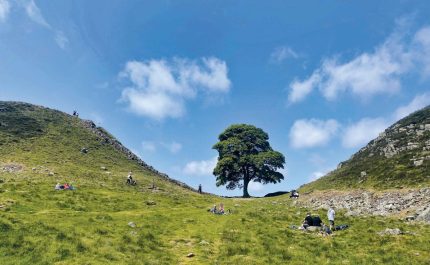
Moment that mattered: Sheikh Hasina flees Bangladesh
In issue 56 we spoke to leading student activist Umama Fatema about Sheikh Hasina fleeing Bangladesh after the fall of her government
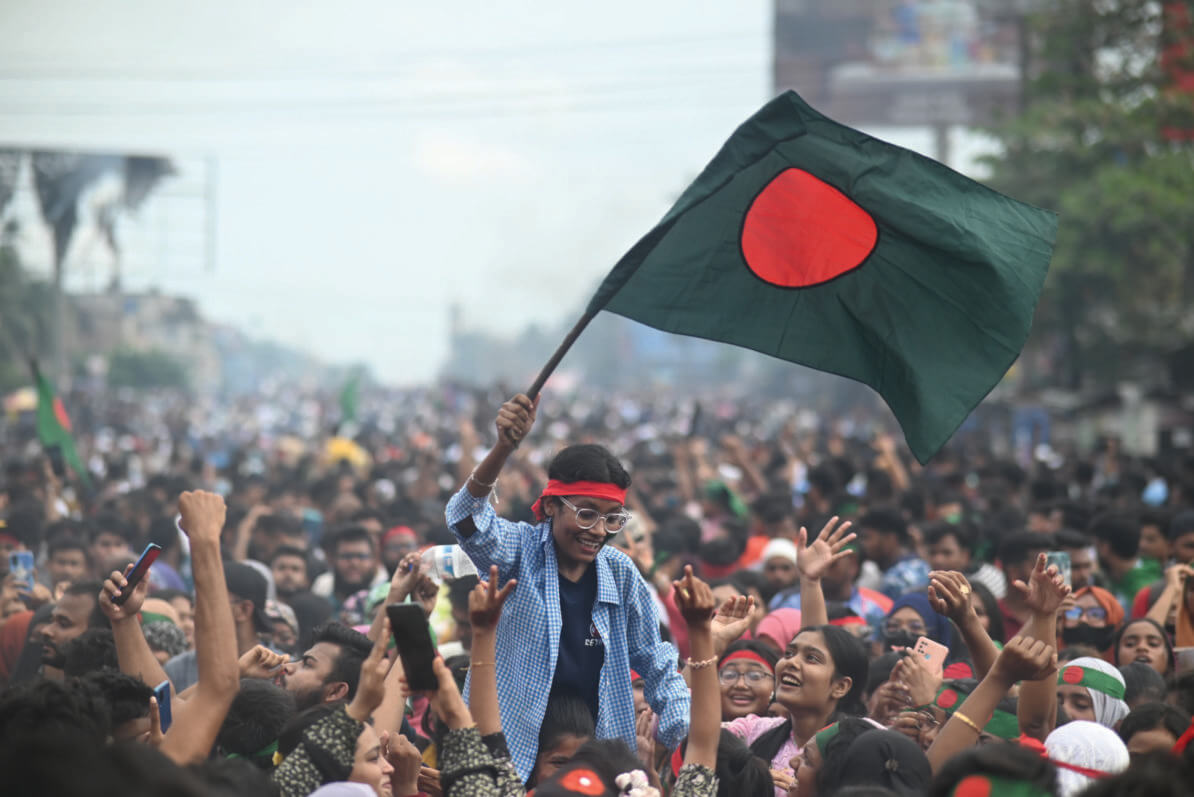
Anti-government protesters react to the resignation of prime minister Sheikh Hasina, 5th August 2024
5th August 2024 (Taken from: #56)
“It was like waking from a dream and realising it has come true,” Umama Fatema says of the moment that she heard that Bangladesh’s prime minister Sheikh Hasina, who ruled the country with an iron fist for a total of 20 years, had fled to India. “Every political activist has a fantasy of such a thing, but to see it actually happen is something else – it is a once-in-a-lifetime moment.”
On the streets of Dhaka, Bangladesh’s capital, jubilant crowds celebrated in the streets as news of Hasina’s departure spread. Along with thousands of other protesters, 25-year-old biochemistry and molecular biology master’s student Fatema entered the luxurious gated residence that had been hastily abandoned by the former prime minister. “I just had to see it myself – how she lives,” says the longtime political activist and spokesperson for Students Against Discrimination, a nationwide movement set up by university students in July to coordinate the anti-government protests which ousted Hasina. “It was like a carnival. But I didn’t take any videos or photos. I just tried to capture as much with my eyes as I could.”
The collapse of Bangladesh’s government on 5th August 2024 followed a crackdown by authorities against student-led demonstrations that left hundreds of people dead and thousands injured. The protests, which began in early June, were initially sparked by a high court ruling that reinstated a controversial “quota scheme” reserving around a third of government jobs for descendants of the freedom fighters who fought for the creation of a Bangladeshi state out of East Pakistan in 1971. This programme was widely seen as favouring the support base of 76-year-old Hasina’s ruling party, the Awami League.
Tensions were further stoked when Hasina, who had been re-elected in January 2024 in a vote boycotted by her main opponents, publicly called the protesters “Razakars” – a loaded term used to describe those who collaborated with Pakistan during the bloody war for independence. “It’s meant to be an extreme insult against us to shame us and put us down… but we responded by coming out of our dormitories and chanting: ‘Who are you? Who am I? We are the descendants of Razakar!’” says Fatema, who led female students during the protests. The chant, which became a slogan of the demonstration, was deployed by the students to show how Hasina was using the slur to tarnish all her critics. “It was our way of mocking the prime minister. To tell her that whatever she calls us we will not go away,” she says.
The tipping point, however, came on 15th July when authorities began a brutal crackdown on the protesters. In the city of Rangpur in north-west Bangladesh, police were filmed shooting dead 25-year-old student Abu Sayed as he led a peaceful protest.
In his final moments Sayed can be seen standing alone, both arms outstretched with just a stick in his hand, before being gunned down at close range by an advancing police line and collapsing to the floor. On the same day that Sayed was killed, Fatema was leading a column of female protesters in Dhaka when they were surrounded by a group of men from the Bangladesh Chhatra League, the student wing of the Awami League. “They attacked us, they were throwing sticks and bricks, and I was beaten,” she says. “We scattered and they chased us, but we managed to get away, just… I wasn’t badly injured but I was panicked and in shock.”
Over the following days, similar scenes played out across the country as the authorities used a combination of brute force and internet blackouts to try to keep the students off the streets. Hundreds were killed and thousands more injured in the deadliest bout of violence in the country’s history since its fight for independence. But instead of curtailing the protests, the state’s heavy-handed response only galvanised support for the demonstrations, which eventually proved too much for Hasina to resist.
“The death of Abu Sayed and the other young martyrs changed everything,” Fatema says. “In the beginning it was all about the quotas. Then it was something bigger – people wanted to know: Why is my son dead? Why has my brother been shot? Why are you killing students? People were moved by this, they could see the pain of grieving relatives and imagine it was their own child or sibling, so they joined the students in their protest. For the first time the people of Bangladesh understood that Sheikh Hasina could be overthrown and they didn’t want to lose this chance, so they kept coming every day to the streets.”
On 8th August, just days after Hasina fled the country, 84-year-old Muhammad Yunus, a Nobel peace prize-winning economist who pioneered the use of microcredit in Bangladesh to help lift millions out of poverty, was inaugurated as the country’s interim leader with the backing of the student movement. On taking up the reins of power, Yunus called on people to “refrain from violence” and promised the country a “reset”, likening the ousting of Hasina to a “Second Victory Day” for Bangladesh.
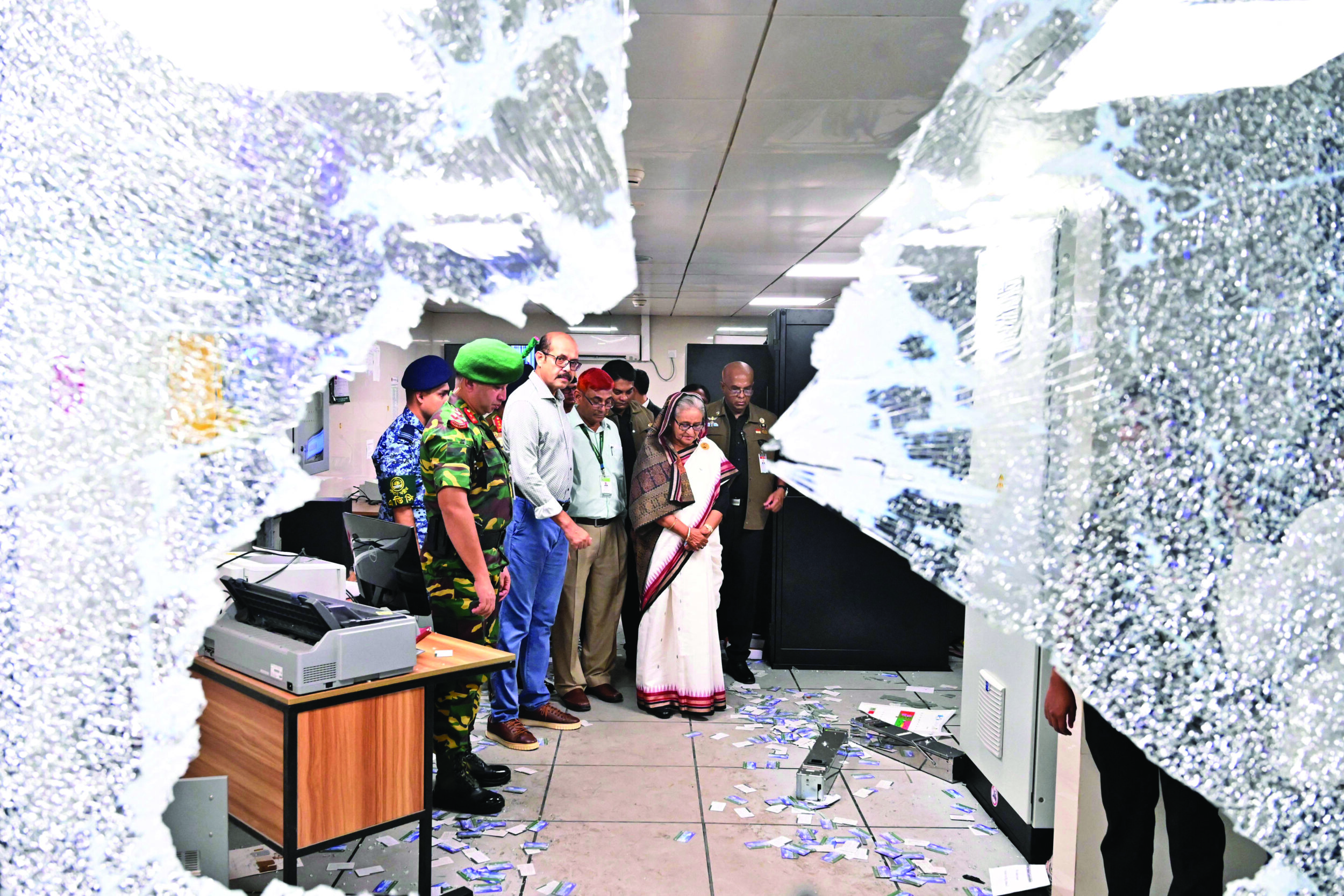
In this handout photograph supplied by the prime minister’s office, Sheikh Hasina visits a metro station in Mirpur in Dhaka damaged during anti-government protests, 25th July 2024
Yunus, who is not allied to any political party in Bangladesh, has eschewed the prospect of a long-term future in politics and is widely seen as a unifying figure with strong relations to western governments. His new cabinet, mostly composed of technocrats and civil society activists, including two student leaders, has already established at least half a dozen commissions to review elements of the state including the police, judiciary, electoral system and constitution. The commissions, due to report back by the end of 2024, have been tasked with the question of how to reshape politically compromised and corrupt institutions.
“Under Hasina there has been a loss in trust in these agencies. There has been a lot of corruption, nepotism, to do anything it was necessary to have an affiliation [with the Awami League],” says Fatema. “The purpose of these reformation commissions is to prevent this happening again, to reform the whole system and ensure a democratic future.”
Meanwhile an inquiry has also been set up to investigate the enforced disappearances that occurred during the old regime. Since Hasina fled the country, several political opponents of the former prime minister, whom the authorities denied they were holding, have been released from secret prisons where they had been held for up to eight years. Headed by veteran human rights campaigner Mohammad Nur Khan, the inquiry will also collect information on the clandestine detention centres and the alleged torture carried out in them.
Despite the interim government’s progress, fears remain that there could still be a backslide into further violence and vigilantism. In the wake of Hasina’s departure many figures associated with her establishment and its crackdown on the protesters, including judges, army officials and Awami League members, either fled to India or went underground fearing reprisals by mobs or arrest by the authorities.
According to a UN report at least 250 people were killed after 5th August in possible revenge attacks by the protesters and opposition party members who were persecuted by Hasina’s regime. Police officers are also largely absent from the streets and 187 senior law enforcement officials have absconded. In early October 2024, hundreds of protesters besieged the supreme court in Dhaka demanding the removal of a dozen judges that they accused of being “partisan, corrupt and allies of the fascist Awami League”. All 12 were placed on leave.
Another concern is that intercommunal violence could break out in the security vacuum, in particular against Bangladesh’s 13.1 million Hindus, who make up around eight percent of the population and have historically supported Hasina’s secular Awami League.
“The security situation is very delicate right now… many police and officials have run away because they are afraid the people will take revenge on them for killing protesters,” Fatema says. “Bangladeshis are peace-loving people, but there is the possibility for agitators among us to create trouble because the law enforcement is so weak.”
People wanted to know: Why is my son dead? Why has my brother been shot? Why are you killing students? People were moved by this”
In a bid to lead by example, student leaders have called on people to bring back the items looted by protesters who overran Sheikh Hasina’s hastily abandoned residence in the heady days that followed her abrupt departure. Among the property returned so far: 170 pieces of furniture, a cat, jewellery, mattresses and a cache of security and defence documents. Meanwhile, a man who took a duck and ate it has reportedly handed over the money to pay for it.
Questions still remain about how and when the transition of power will take place. At the moment there is no timeline for elections to be held. However, in an indication that it is unlikely to be in the near future, the new government has said a vote will not be held until “vital reforms” to state institutions have been made. On 17th October a Bangladeshi court issued an arrest warrant for Sheikh Hasina.
“There is a lot of hope, this is our chance to change the system. But there is also anxiety. After so much bloodshed people have a high expectation of this government – hundreds of people have died for this,” says Fatema. “During Sheikh Hasina’s regime the people were not respected by their government; this new government and future governments must respect people. This is the most important thing. The people have shown they will not tolerate anything less any more.”
Slow Journalism in your inbox, plus infographics, offers and more: sign up for the free DG newsletter. Sign me up
Thanks for signing up.