Marianne Faithfull, 1946-2025
Musician and producer Rob Ellis reflects on the life and legacy of his friend and long-time collaborator Marianne Faithfull, who died in January 2025
30th January 2025 (Taken from: #58)
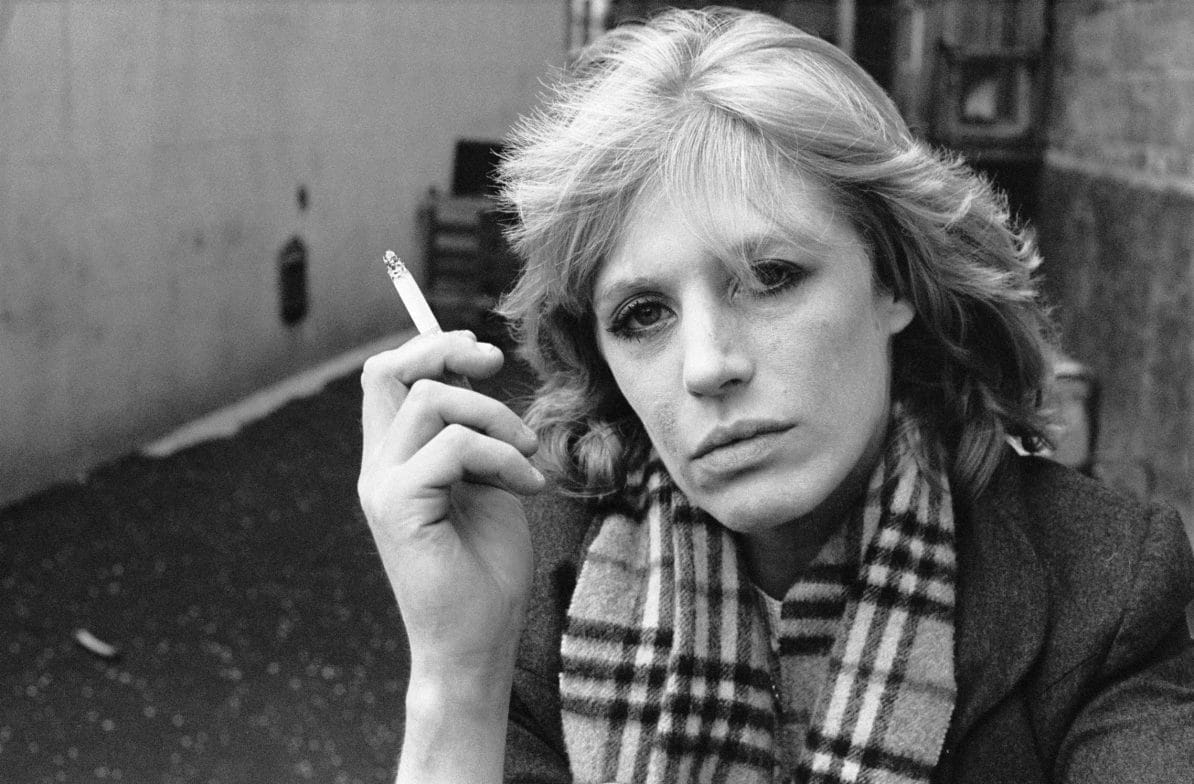
“I think everyone was shocked when they heard that Marianne died,” says Rob Ellis. “We shouldn’t have been really, as she was 78 and had been ill for a while, but it’s Marianne – she’s the great survivor. Despite everything that was thrown at her, she really enjoyed life and she had an incredible one. It was a very rich tapestry that she wove.”
Faithfull first came to the world’s attention as a 17-year-old folk singer. Her first single, ‘As Tears Go By’ – penned by the Rolling Stones’ Keith Richards and Mick Jagger, with whom Faithfull would have a highly publicised relationship – kickstarted a career that saw her release 22 solo albums and collaborate with some of the biggest names in music including the Beatles, David Bowie, PJ Harvey and Nick Cave. For Ellis, who first started working with Faithfull on her 2004 Before the Poison album, it was no surprise that artists, particularly songwriters, sought her out. “You don’t get a voice like hers very often,” he says. “It was a once-in-a-generation thing – so raw and so honest. If you’re a writer, to have someone with a voice like that singing your song is the dream, because they will create something unforgettable. I’ve seen seasoned musicians moved to tears when they heard Marianne sing in the studio.”
Ellis also believes Faithfull’s unique place in musical history, working with and inspiring everyone from The Beatles to Jarvis Cocker, drew musicians to her. “Marianne is like a line that runs through the last 60 years of popular music. All of these artists are tapping into this rich seam that she represents,” he says.
Ellis, who co-produced three albums with Faithfull, believes her voice, looks and notoriety often overshadowed her own songwriting abilities. “She was a hugely underrated lyricist,” he says. “She would draw from her own experiences, but she was also incredibly well read, you’d never see her without a book in her hand. She was interested in history, current affairs, literature, poetry… and she could distil what she’d read and make it her own. It felt like there were hundreds of years of experience in every line.”
Faithfull’s own experiences were often difficult and included periods of addiction and homelessness. In her 1994 memoir Faithfull: An Autobiography, she cited the infamous 1967 drugs raid on Keith Richards’ West Sussex home, Redlands, as the turning point. Tabloid reports of the raid focused on the fact that Faithfull was found naked except for a fur skin rug (Faithfull said she had been taking a bath when the raid took place and grabbed the first thing she could to cover herself). In the moral panic that ensued, Faithfull was denounced by the Vatican as a witch and the Archbishop of Canterbury prayed for her soul. Talk of her talent as a singer and an actor disappeared. “I became the girl in the fur rug. That’s all anyone saw. Not the music, not the person,” she wrote in Faithfull. “After Redlands, I began to fall apart. I didn’t know how to deal with the shame, so I numbed it.”
“She had a difficult relationship with her homeland,” says Ellis. “Britain made her, but in many ways it broke her too.” Her relationship with Mick Jagger ended in 1970, the same year she suffered a miscarriage and lost custody of her son, Nicholas. Shortly afterwards she was placed in a medically-induced coma after attempting suicide in Australia. Returning to England she descended into heroin addiction, living on the streets in Soho.
In 1979, having completed an NHS treatment programme, she made a remarkable musical comeback with the album Broken English. Full of pain, anger and honesty, it brought her new fans among the punk generation, but further problems with addiction followed, and she would oscillate between relapse and recovery for much of the next decade. She was still recording music though, including a contribution to Lost in the Stars, a 1985 tribute album to composer Kurt Weill, which was where Ellis first heard her. “There were some great singers on that record – Tom Waits, Lou Reed, Todd Rundgren, Sting – but her voice stands out a mile. I thought ‘who the hell is this person?’”
When the two met during the recording of Before the Poison, written by Ellis’ long-term collaborator PJ Harvey, he got to find out. “She was a riot,” he says. “We hit it off immediately and she asked me to produce a few tracks on that album and that developed into 20 years of working together.” That included Ellis joining Faithfull’s live band. “The audience adored her,” he remembers. “You had to have your wits about you though, as no two nights were ever the same; she’d change the structure of songs and go off in different directions. You had to be on your toes to make sure you stayed with her every step of the way.” Ellis remembers that before every show Faithfull would gather the band in prayer. When he pointed out to her that he’d never really considered himself spiritual she replied, “But of course you’re spiritual darling, you’re a musician.” It was a moment that resonated with Ellis. “I’ve always appreciated her making me realise that was in me,” he says. “It was typically her. Simple, succinct, wise and a little bit cutting. And a revelation at the same time.”
Despite the distance there often was between them – Faithfull lived in France while Ellis was based in the UK – and her failing health, their friendship would continue over the years, aided by long phone conversations and rituals when they saw each other. “She would always persuade me to get fish and chips,” says Ellis with a smile. “I don’t know why, but that really tickled me. It felt like going to the chippy with the Queen Mother. Marianne was an interesting mix. She was down to earth, but incredibly unique at the same time. She could be gentle and sweet, but also the fiercest person you’d ever meet. If you were on her side, she would support you doggedly, but if you weren’t on her side – oof! She did not suffer fools gladly.”
It was quite a task for her to even get into the studio each day, let alone to sing, but her humour and spirit was never in doubt”
Of all his memories, Ellis’s most abiding is recording the 2018 album Negative Capability in Paris, a record that Faithfull described as the most honest of her career. “Her health was never very good, and she was particularly ill at that point, but she was determined to make that record,” he says. “It was quite a task for her to even get into the studio each day, let alone to sing, but her humour and spirit was never in doubt. She had a twinkle in her eye and she made every recording session a very joyous occasion.” The album includes a version of ‘As Tears Go By’, the third time she had recorded the song after her debut single and as a 40-year-old for the album Strange Weather. “It’s like a document of her life at different stages,” says Ellis. “When you compare the versions it’s very moving. The first version you hear the naive teenager she was and then you have her as a defiant woman in her forties, quite angry with the world, and then you have this final version from a woman facing her mortality. She had major breathing problems at that point, but still managed to deliver a forceful performance. Everyone who was there will remember that as being one of the most amazing, unique experiences of their entire lives, because it really felt like she was saying goodbye.”
But Faithfull had one final encore up her sleeve. In April, Burning Moonlight, an EP she knew would be her last, was posthumously released, featuring a song written with her grandson Oscar Dunbar. “Burning Moonlight feels like a fitting epitaph,” says Ellis, who co-produced the record. “It is a classic example of the work she did, but also of that indomitable spirit of hers. It was done with great difficulty at the end of her life, but, yet again, she roused herself to give us one final act of defiance.”
Marianne Faithfull in her own words
On the 60s: “I never fit the flower-child thing. I didn’t even like flowers all that much”
On relationships: “Maybe the most that you can expect from a relationship that goes bad is to come out of it with a few good songs”
On refusing to apologise: “I don’t think I was born with a sense of shame”
On addiction: “It was a waste of my time”
On growing older: “I’ve learned not to care what other people think. It’s happened slowly, very slowly… but I did it”
On her comeback album Broken English: “I always knew I was something quite extraordinary”
On looking back: “Of course I have regrets; I’m not stupid”
On her life: “I have lived my life as an adventurer. It’s been rather wonderful”
Sources: BBC, Faithfull: An Autobiography, Guardian, Telegraph
Slow Journalism in your inbox, plus infographics, offers and more: sign up for the free DG newsletter. Sign me up
Thanks for signing up.