Moment that mattered: ICC arrest warrants are requested for Israeli and Hamas leaders
In issue 55 of Delayed Gratification we spoke to Dr Kevin Jon Heller, special advisor on war crimes to the ICC, about the arrest warrants requested for Israeli and Hamas leaders
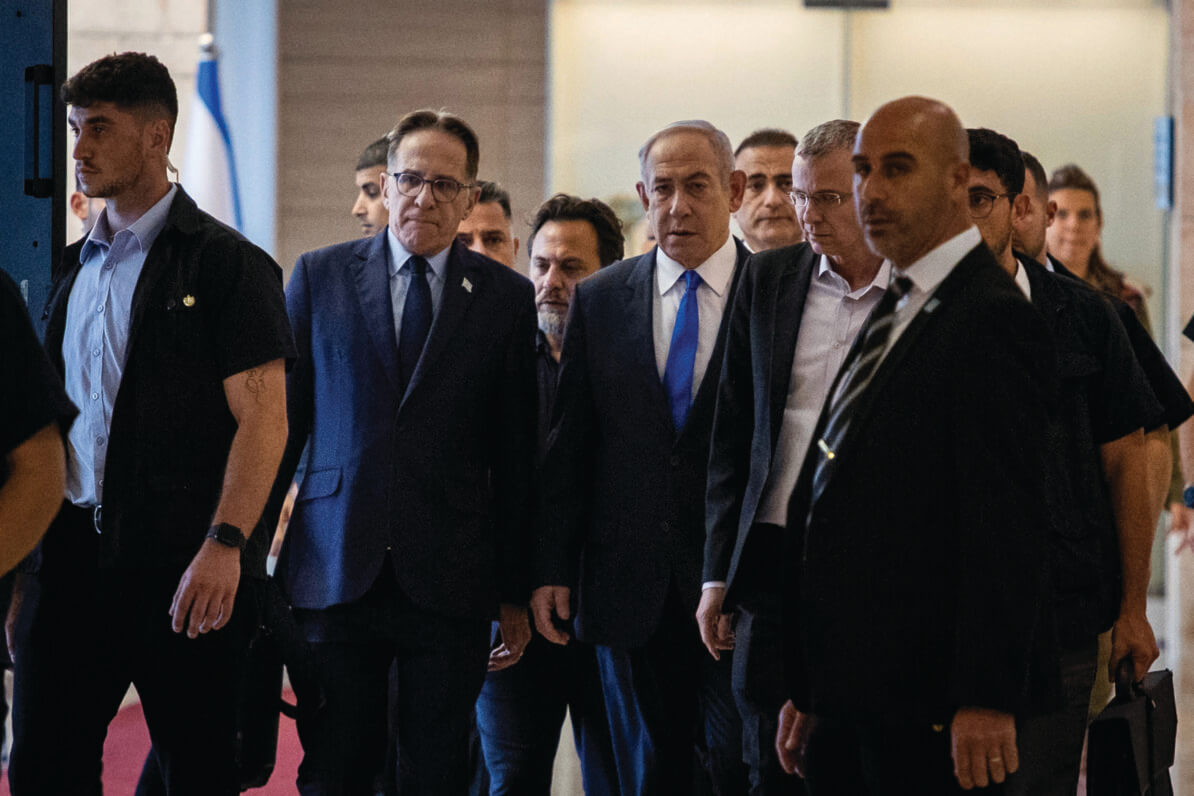
Benjamin Netanyahu arrives at the Israeli parliament on 20th May, after the ICC announced an application for an arrest warrant for the prime minister. Photo: AFP via Getty Images
20th May 2024 (Taken from: #55)
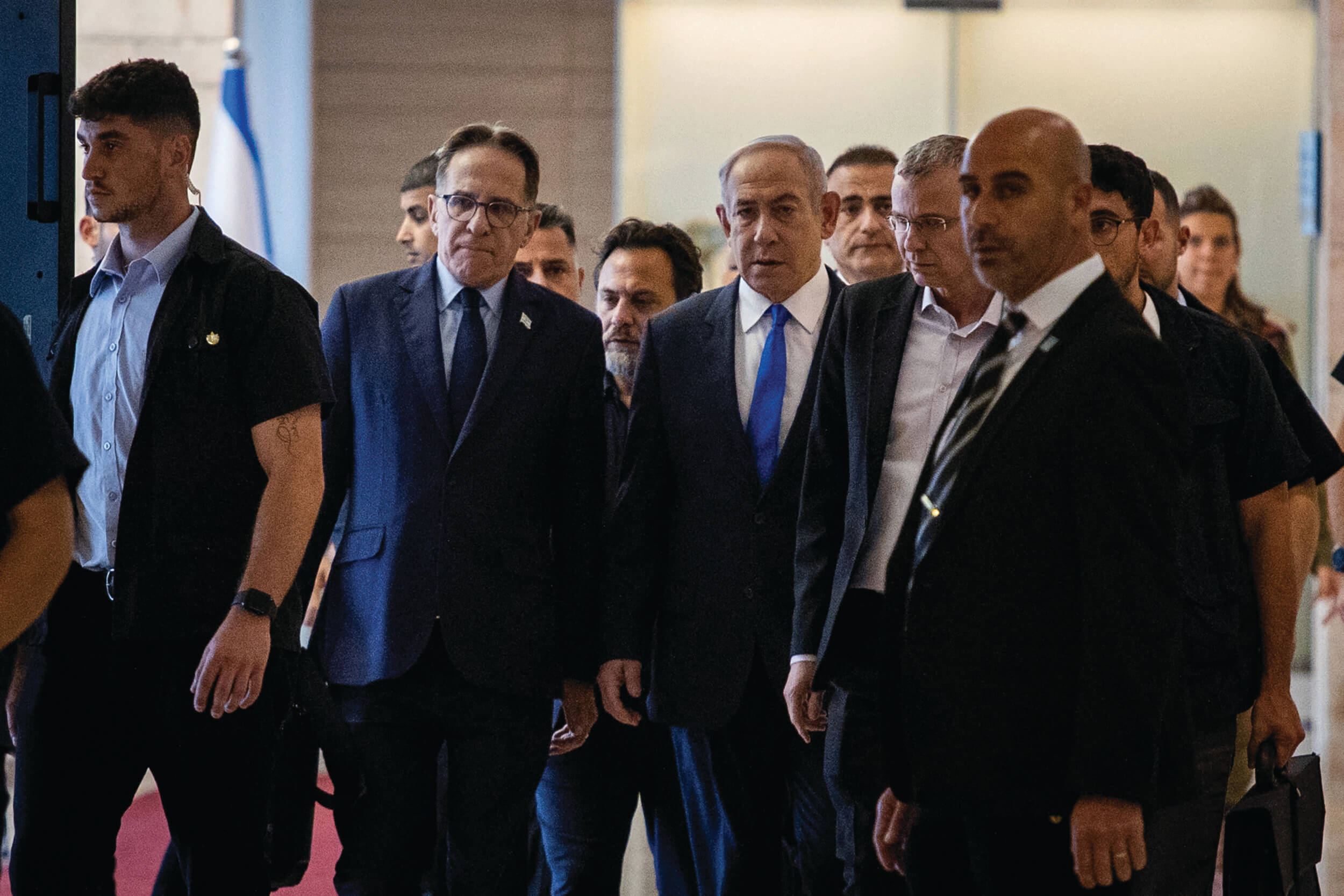
Benjamin Netanyahu arrives at the Israeli parliament on 20th May, after the ICC announced an application for an arrest warrant for the prime minister. Photo: AFP via Getty Images
Starvation of civilians, intentional attacks on civilians and extermination. These were just some of the damning allegations levelled at Israel’s prime minister Benjamin Netanyahu and defence minister Yoav Gallant by Karim Khan, chief prosecutor of the International Criminal Court (ICC), in an arrest warrant request issued on 20th May 2024.
At the same time, Khan also requested that Hamas leaders Yahya Sinwar, the leader of the Palestinian militant group in Gaza, and Mohammed Deif, the founder of its military wing, be indicted for war crimes and crimes against humanity including taking hostages, sexual assault and torture. A request for a warrant for Ismail Haniyeh was withdrawn by Khan after Israel assassinated the Hamas political leader in Iran on 31st July. Israel claims to have killed Deif in an airstrike on 13th July. Hamas has not confirmed this and the arrest warrant request remains in place.
“Prosecutor Khan has been extremely bold,” says Dr Kevin Jon Heller of the announcement. Heller is professor of international law at Copenhagen University and a special advisor on war crimes to the ICC. “These arrest warrants have been issued in spite of strong opposition from powerful states,” he continues. “This is a clear message from Khan that politics will not be allowed to influence the application of international law.”
The charges against leaders on both sides of the conflict stem from the attack carried out by Hamas on 7th October 2023 in southern Israel. Around 1,200 people were killed and 251 were forcibly taken to Gaza as hostages. Israel responded by launching a military campaign in Gaza to eliminate Hamas in which more than 42,000 Palestinians have been killed, according to health officials in the territory.
The ICC announcement sparked fury on both sides of the conflict. In a stinging personal attack, Netanyahu accused Khan of being one of the “great antisemites in modern times” and of “pouring gasoline on the fires of antisemitism.” Israel’s war, he insisted, was “just” and a response to the worst attack on Jews since the Holocaust. Meanwhile, Hamas accused the prosecutor of wrongly “equating the victim with the executioner” and demanded that the arrest warrants against its leaders be immediately cancelled.
These arrest warrants have been issued in spite of strong opposition from powerful states” — Dr Kevin Jon Heller
One of the ICC’s fiercest critics is Israel’s ally, the US. Responding to Khan’s request for arrest warrants for Netanyahu and Gallant, Joe Biden described the move as “outrageous” and as drawing a false moral equivalence between Hamas and Israel. The US has not ratified the Rome Statute, the ICC’s founding treaty, and is not among the court’s 124 members.
In April 2024, 12 Republican senators wrote to Khan warning him not to pursue charges against Israeli officials. “The US will not tolerate politicised attacks on our allies. Target Israel and we will target you,” reads the letter. The senators’ threat has been widely seen as a thinly veiled reference to a George W Bush-era law, colloquially known as The Hague Invasion Act, which allows the president to use “all means necessary”, including military action, to release any American or allied official detained by the ICC.
“This letter can only be described as the words of five-year-old wannabe gangsters,” says Heller. “It’s extremely well documented that there has been a multi-year, multi-prosecutor programme of harassment to try and make the ICC’s investigation into the Palestine situation go away.”
Court officials have also been subject to covert Israeli surveillance. A joint investigation by +972 Magazine, Local Call and the Guardian found that Israel had carried out a near decade-long espionage campaign aimed at smearing and threatening senior ICC staff. Both Khan and his predecessor, Fatou Bensouda, were among those who had their phone calls intercepted and emails hacked.
“The court is used to threats, we are used to working under pressure, but it’s probably never been as intense as it is now,” says Heller, who has been part of the prosecutor’s team reviewing evidence and conducting legal analysis in relation to indictments brought against Israeli and Palestinian leaders.
Israel’s surveillance operation began in 2015, shortly after Palestine became a member of the court. Israel is not a member, but Palestine’s ratification of the Rome Statute means that the court has jurisdiction over any international crime committed on Palestinian territory. This includes war crimes and crimes against humanity committed by Israeli citizens in Gaza.
In December 2023, Khan visited the scene of atrocities carried out by Hamas in Israel, including the site of the Nova music festival where 364 civilians were killed, and the burned-down kibbutzim in Israel’s south where hundreds of people were murdered in their own homes. “I witnessed scenes of calculated cruelty. The attacks against innocent Israeli civilians on 7th October represent some of the most serious international crimes that shock the conscience of humanity,” Khan said in a statement following the visit.
Although the court has not been given access to Gaza by Israel or Egypt, which control the Strip’s borders, Heller points out this is not unusual in war crimes investigations. “There have been many situations in the court’s history where we do not have access to the crime scene. For example, this was also the case in Darfur,” he says, referring to allegations of genocide and war crimes committed in western Sudan since 2002.
Indeed, Heller says that the investigation team has not been short of evidence to look at. “We have testimonials from survivors and families of victims as well as from doctors, lawyers, journalists and NGO workers on the ground in Gaza,” he says. “We have digital evidence such as mobile phone videos, much of which we’ve received directly from witnesses and victims… We’ve also relied on inculpatory statements by the suspects on both sides of the conflict.”
A panel of ICC judges has been considering whether to issue the arrest warrants. “[Khan] made it very clear that he would not seek a warrant if there was not a reasonable prospect of conviction,” says Heller. “I think that is a wise policy decision… The worst possible outcome would be to file the application, but then have the case fall over when it comes to confirmation of charges or when it comes to an actual trial.”
Khan made it very clear that he would not seek a warrant if there was not a reasonable prospect of conviction”
Once the warrants are issued, all ICC member states are legally obliged to detain the accused if they set foot on their territory. For Palestinian suspects this is likely to pose less of a problem than for Netanyahu and Gallant, says Heller: “It’s very unlikely that Sinwar is going to come out of his tunnels and go somewhere that he might be apprehended… The Israeli suspects are in a very different situation…Their allies are in the west. To not be able to go to essentially any European country has a major impact on their ability to be political and military leaders.”
However, states don’t always comply with their obligation to enforce arrest warrants. For example, Mongolia, an ICC member, did not arrest ICC fugitive Vladimir Putin on his recent visit to the country. “The court is ultimately dependent on the willingness of states to cooperate with it and it would be disingenuous to suggest anything other than that this record is mixed,” says Heller. “Germany has very strongly implied that it would. France said so explicitly and even the UK under the new government has said explicitly that it will honour the arrest warrant.”
Time is also on the court’s side. “Even though they may not be in the dock immediately, who knows what’ll happen in two years or ten years, or even 20 years. Nobody thought that former Serbian president Slobodan Milosevic or Radovan Karadžić would ever end up in the dock but that day did eventually come,” says Heller. The latter is today in prison in the UK; Milosevic died in his prison cell before his sentencing. “There is no statute of limitations on war crimes or crimes against humanity. There is no expiration date on an arrest warrant,” says Heller. “If we get the arrest warrants, these charges will stand for the rest of the suspect’s lives.”
Slow Journalism in your inbox, plus infographics, offers and more: sign up for the free DG newsletter. Sign me up
Thanks for signing up.