The stories behind the shots
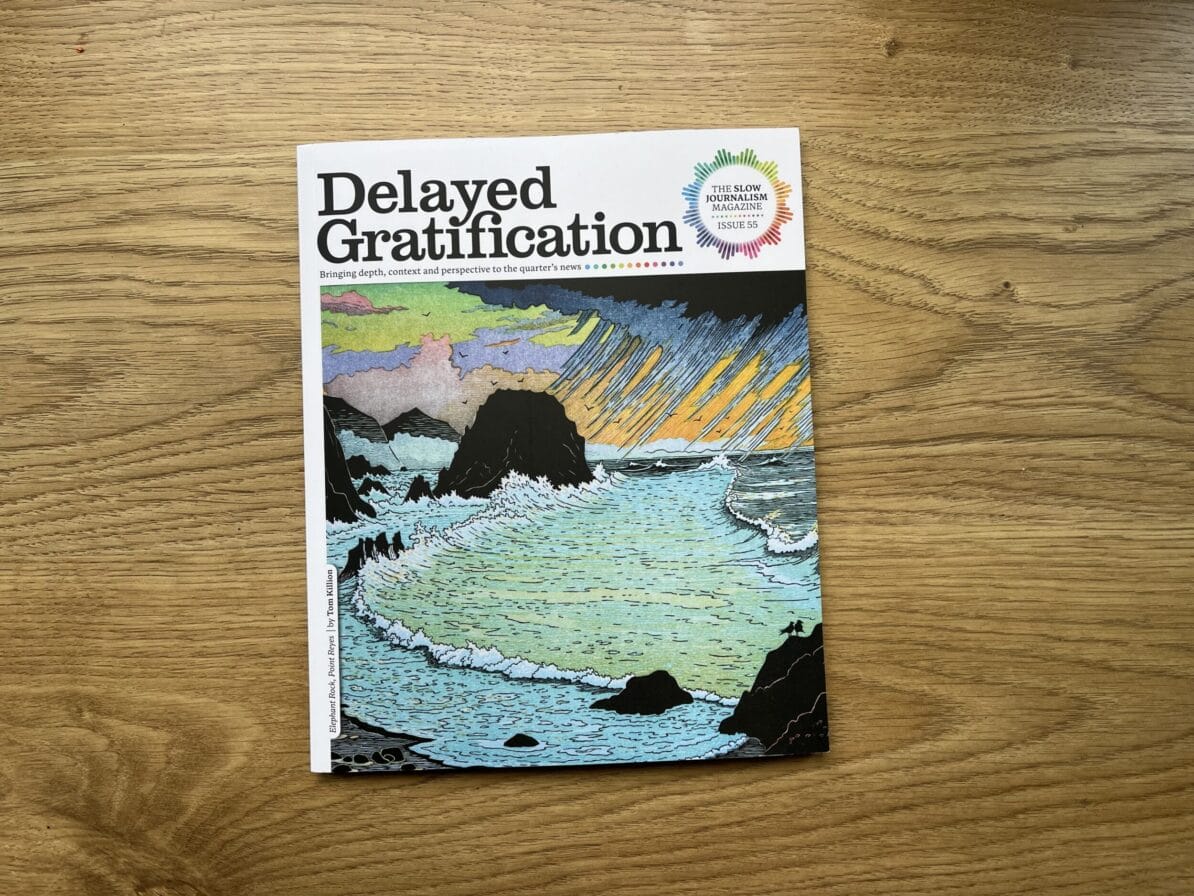
In issue 55 of Delayed Gratification, out now, we spoke with photojournalist Justin Jin about the race to make emissions-free green steel, replacing coking coal with hydrogen. To research the story he travelled across Europe and down to Mauritania – to see his full set of extraordinary photos, pick up a copy of the magazine or subscribe and add the latest issue to your order now.
We didn’t have space in the magazine to tell some of the stories of how he got the amazing shots – here’s a sample of the lengths he went to…
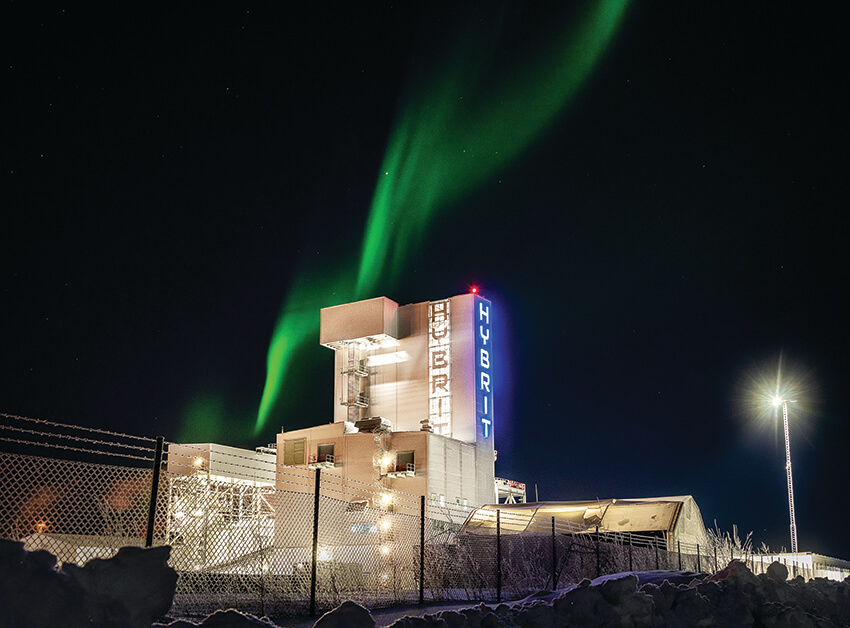
The northern lights (aurora borealis) shine above the HyBrit fossil-free green steel pilot plant
HyBrit and the northern lights
Jin says that when he initially looked into the story, he looked up images of HyBrit, the pilot green steel plant in Sweden. “It looks kind of ugly,” he says. “I thought, how do you bring out the beauty of green steel? And I thought, well, wouldn’t it be nice to have the northern lights over it since it’s in the Arctic Circle?”
The manager of HyBrit pointed out that he’d need to be very lucky – he’d need a rare combination of a cloudless sky, a new moon, and a powerful solar magnetic field all to come together on a winter’s night – and that even if they did there was no guarantee the lights would appear at the right place behind the plant.
Undaunted, Jin tracked all the variables on apps from his home in Brussels for several weeks, jumping on a plane to the Arctic when it looked like they would all align. “It was minus 30 degrees Celsius, I was in my Arctic gear and doing static jogging to keep warm in the dark. I stayed there from six in the evening until after midnight, and nothing happened,” he says.
At 1am he gave up, headed back to his car, put away his equipment, turned to leave – and saw the aurora borealis appearing directly behind the plant. “I ran back, set up the tripod again, put up the camera for five minutes, shot away and then it was gone,” he says.
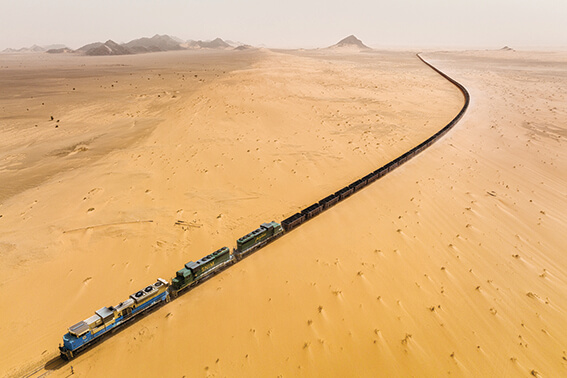
The world’s longest train, measuring some three kilometers, travels through the Sahara Desert in Mauritania carrying iron ore from the hinterland to the coast for export
An iron ore train crossing the Sahara
In Mauritania, Jin set himself up next to some railway tracks in the Sahara and waited for an iron ore train to pass by. “I had booked a driver with a four by four, we took a big jerry can of water and a couple of blankets and slept beside the track. I didn’t bring a tent because I didn’t want one to be in my picture,” says Jin. The train he wanted to capture is three kilometres long, the longest in the world, with up to 300 carriages of iron ore.
“The problem was that the first two trains came at night,” says Jin. “I heard this rumbling noise from afar, and then woke up at three in the morning, but I couldn’t photograph them because it was all dark. It’s a cargo train and not a passenger train so there’s no schedule, you have no idea when it will come.”
On the third day, he heard the rumbling noise again. “We put our ears to the metal of the railway track, and we could feel the vibration. At that stage the train was probably around 20 kilometres away. I launched my drone and saw this train coming from afar.” Jin’s driver was anxious that the drone might gain them unwanted attention. “This is al Qaeda territory, it is on the border with Western Sahara, Morocco, it’s like no man’s land this deep into the Sahara and we were there without permission,” says Jin. “So as soon as the train came, I took this shot, then packed up and left.”
Slow Journalism in your inbox, plus infographics, offers and more: sign up for the free DG newsletter. Sign me up
Thanks for signing up.