Inside DG #57: The road to Damascus
A Q&A with the writer of our story about the fall of the Assad regime in Syria from issue 57 of Delayed Gratification
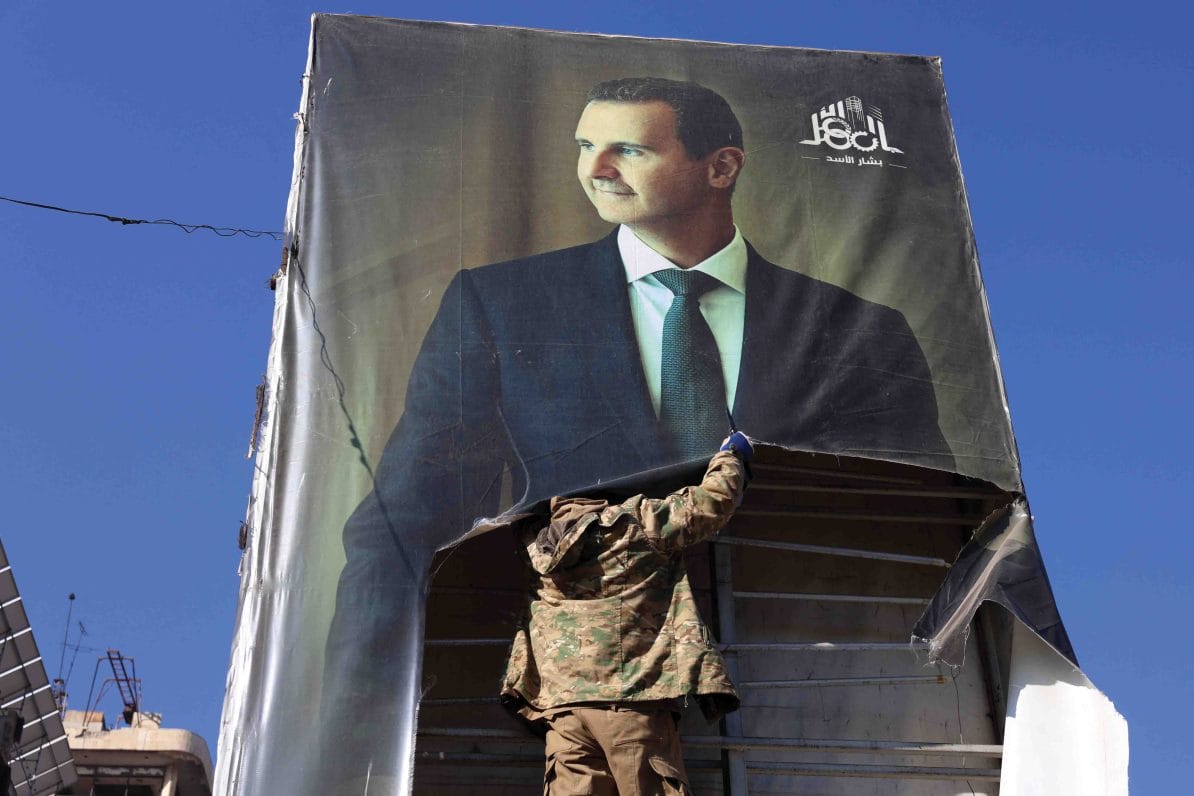
An anti-government fighter tears down a portrait of Syria's former president Bashar al-Assad in Aleppo after Islamist rebels entered the northern Syrian city on 30th November 2024. Photo by Mohammed Al-Rifai/ AFP via Getty Images
The 57th issue of Delayed Gratification features an article by Istanbul-based journalist Mitra Nazar about the fall of the Assad regime in Syria. Mitra spoke to Delayed Gratification associate editor Matthew Lee about her research for the story, which included a Christmas trip to Aleppo.
Matthew Lee: What do you remember about 8th December, the day the Assad regime collapsed?
Mitra Nazar: I was at home in Istanbul, and shortly after waking up I heard on the news that Assad had fallen, that the rebels had taken Damascus. I also heard that Syrians in Istanbul were pouring into the streets of the Fatih district, where many of them live, so I got my stuff together and headed there. The taxi driver told me that he wouldn’t be able to take me all the way to the place where Syrians were gathering because he’d heard that there were too many people in the streets. When I arrived it was incredible – an outpouring of relief and happiness, young people waving flags, singing and chanting. It was a very positive atmosphere. I’ve spoken to so many Syrians over the past 10, 15 years – not only in Turkey but also in the Balkans where I used to work – and they’ve been through so much. I’ve heard so many stories of the war, of people fleeing, of lives as refugees… So these celebrations were amazing to see.
The next day you went to the Turkey-Syria border to speak to some of the first refugees heading home. What was the atmosphere like there?
The people in the queue to cross back into Syria were understandably tense. They weren’t sure what would be waiting for them. Many of them were about to step into Syria for the first time after many years away, having not seen their families for a long time; some didn’t know if their house would still be there. There was a lot of uncertainty about why they had to wait so long at the border – the Turkish authorities weren’t prepared for the influx.
A few weeks later you visited Aleppo, a city that experienced fierce fighting in the Syrian civil war from 2011 onwards. What was it like going there?
I don’t really have the words to describe the level of destruction that I saw. I’ve seen destruction from earthquakes [Mitra’s article for Delayed Gratification on the February 2023 Turkish earthquakes can be read here] but in Syria entire neighbourhoods had been levelled, and no reconstruction work had been done since the bombing eight or nine years ago. The closer we got to Aleppo the worse it got, it was shocking to see. In the city we went to the neighbourhood where the opposition to Assad had lasted the longest and it was utterly devastated.
How did you find your interviewees in Aleppo?
I was working with a fixer, a student from Aleppo who was very excited – he’d spent all these years living under the isolation of the Assad regime and he’s suddenly working with all these foreign journalists. A couple of days before I went we spoke on the phone about what’s going on there, and I told him that one of the stories I wanted to do was about the Christian community in Aleppo because I was there at Christmas, and he arranged an interview with one of the priests. I also really wanted to speak to female activists and that was difficult to arrange; everybody was still a bit careful because of the new leadership and their Islamist roots. I finally found Natalie Bahade, who was fearless and happy to talk about women’s rights and culture after Assad. The rest of the interviews came from just wandering around the city and speaking to people.
In March hundreds of civilians were killed in sectarian violence in Latakia province. Has your experience of speaking to Syrians given you hope that a stable, peaceful Syria can be built, despite the huge challenges ahead?
What happened in March was terrible, but overall I think many Syrians are still hopeful. There were expectations that it would get a bit worse before it gets better, but there’s such an enormous sense of relief that Assad has gone and his whole system has collapsed. Decades of repression gone overnight. I spoke to minorities – to Christians, to women – who have a lot to fear with this new leadership, but they were optimistic. They don’t know what will come next, but they understood that the end of the Assad regime was something that needed to happen.
You can read the full feature by Mitra Nazar in issue 57 of Delayed Gratification, available from our online shop here.
Slow Journalism in your inbox, plus infographics, offers and more: sign up for the free DG newsletter. Sign me up
Thanks for signing up.