
Inside DG #58: Trump’s first day back
A Q&A with the writer of our story about Donald Trump's first day back from issue 58 of Delayed Gratification
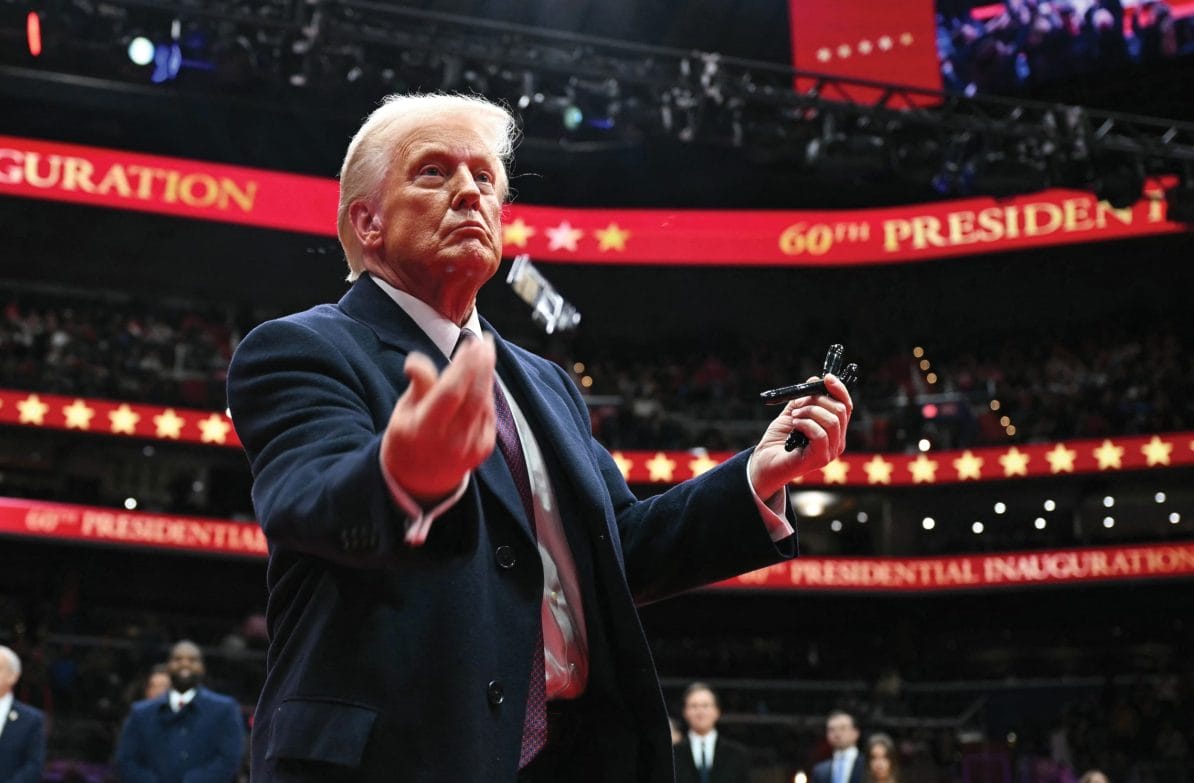
The 58th issue of Delayed Gratification features an article by Matthew Lee and Rob Orchard about Donald Trump’s first day back in the Oval Office. Matthew spoke to our editorial director Marcus Webb about the piece, and the challenges of covering the returning president.
Marcus Webb: Donald Trump dominated the headlines between January and March. How do you turn three months of near-constant Trump news into a single magazine feature?
Matthew Lee: With difficulty! Trump’s former advisor Steve Bannon has referred to a “flood the zone” strategy, in which the administration generates such an onslaught of news – policies, executive orders, provocative statements, information, disinformation – that the opposition and the media can’t focus on any one topic before another five come along to capture the public’s attention. Our challenge was to try and see through this sensory overload.
MW: Does Delayed Gratification’s Slow Journalism approach make it easier or harder to cover the Trump administration?
ML: While doing research for the issue 58 article I looked at the Guardian’s coverage of the first weeks of the new administration and saw that they were tagging 20 to 30 stories as ‘Donald Trump’ pieces every day. They probably published around 2,000 stories on him in the first three months – and we’re only publishing one. What’s abundantly clear is that we cannot possibly aim to be comprehensive in our coverage, or anywhere close to it. We also don’t want to make an issue of the magazine that is dominated by one person – that wouldn’t be pleasant for anyone – so the bottom line is that we had 7,000 words to tell the story of Trump’s first three months, and our first job was to decide what to leave out.
MW: Was that a challenge?
ML: When Trump was out of office it was pretty easy to focus on what actually mattered. After you cut out most of the noise – the memes, the insults, the controversies, the bizarre digressions about “the late, great Hannibal Lecter” and immigrants eating cats and dogs – there wasn’t all that much left. We actually wrote very little about Trump for four years. Now he’s back in the Oval Office there’s still a lot of ludicrous memes and statements, but when he does things like, to use a couple of recent examples, publish an AI-generated deepfake of Obama getting arrested or threaten to revoke comedian Rosie O’Donnell’s citizenship, you can’t just dismiss it as noise because he’s actually president! It’s hard leaving stuff out when it all matters to some degree, and we spend a lot of time talking about how we could squeeze in as much as possible in an accessible way, maybe using infographics or timelines or lots of nibs (news in briefs). We also discussed the possibility of choosing a single topic to cover to the exclusion of everything else. But we were struggling to find the right balance – risk overwhelming readers, or risk coverage that felt incomplete? Eventually we decided to deploy our superpower, which is our slowness.
MW: How did you land on the idea of focusing on Trump’s actions on inauguration day?
ML: On that afternoon of 20th January he signed a record 26 executive orders, as well as 12 memoranda and four proclamations. It was pure shock and awe. He had famously said he’d be a dictator on day one, and while we can debate whether executive orders, which bypass approval from Congress, can be considered democratic, there’s no question that he reshaped America on that first afternoon. Even though we’d limited our coverage to one day we couldn’t possibly cover all his actions on that day in detail, so we selected six that together offer a pretty good insight into what the Trump presidency Mk II means for America. That day set the tone, and we spoke to five Americans who have been living with the consequences of his first-day actions in the months since.
MW: Who did you speak to?
ML: On day one Trump introduced executive orders targeting members of foreign gangs, and we spoke to a Los Angeles lawyer whose client is Andry Hernández Romero, an openly gay Venezuelan who has been deported, without due process, to El Salvador, where he is being held in the notorious Cecot maximum security prison. We spoke to a climate scientist who lost his job at National Oceanic and Atmospheric Administration when Elon Musk’s Doge made its first round of cuts, and he’s terrified about the possible consequences of the administration’s war on science at a time of increasing extreme weather events. We spoke to a Republican mayor of a Texan border town who’s seeing Trump’s border policy produce results – the numbers crossing are down to a trickle – but he’s worried about the impact of Ice [immigration and customs enforcement] raids on his community. We spoke to an experienced diplomat who was fired from her role at USAID by email a few days into the new administration, and she talks passionately about the global impact of these cuts. And finally we spoke to the convicted Jan 6 rioter who left the Maga movement and turned down Trump’s pardon. It’s a great story.
You can read the full feature about Donald Trump’s return to the White House in issue 58 of Delayed Gratification, available from our online shop here.
Slow Journalism in your inbox, plus infographics, offers and more: sign up for the free DG newsletter. Sign me up
Thanks for signing up.