Maggie Smith, 1934-2024
Costume designer Rosie Grant remembers the Oscar winning actor who could reduce both audiences – and her co-workers – to tears
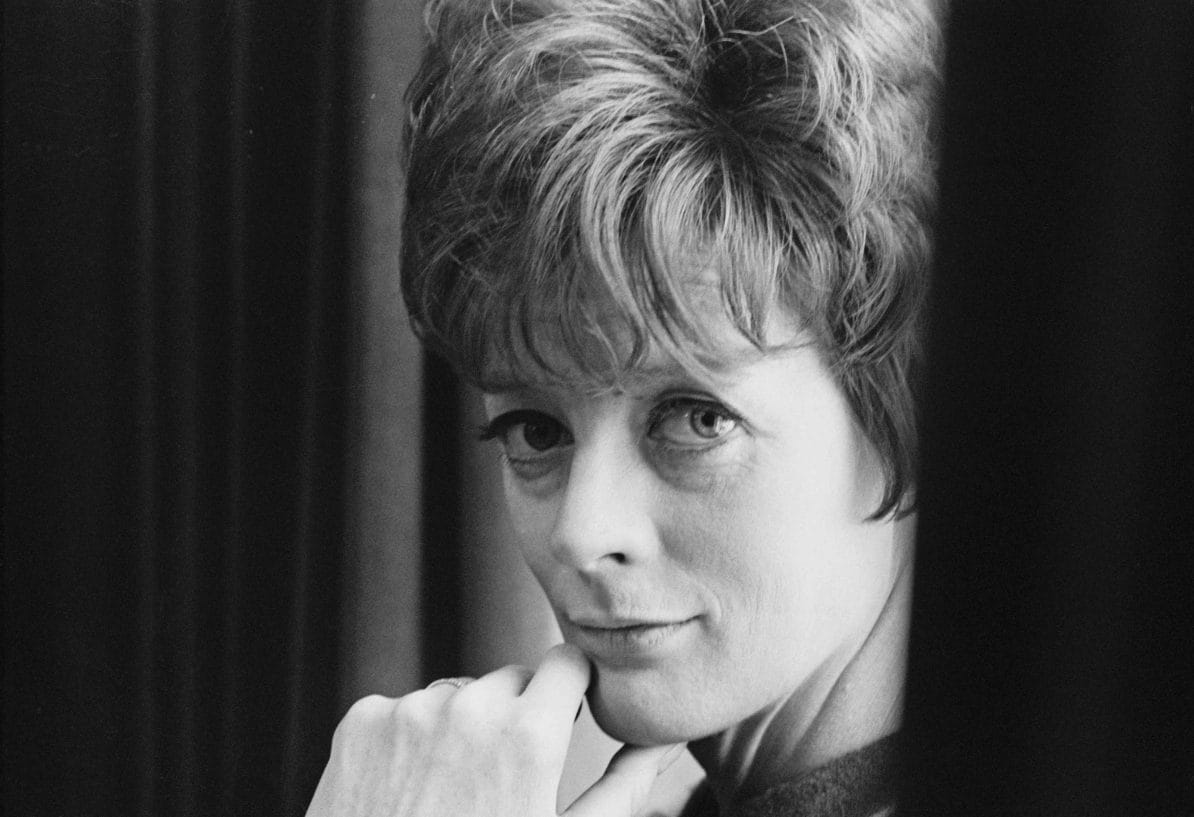
Maggie Smith photographed promoting The Prime of Miss Jean Brodie in 1969. Smith would win an Oscar for her performance in the title role
27th September 2024 (Taken from: #56)
“I worked with Maggie on a few occasions and they were always memorable. The first time was in 1999 on a film called All the King’s Men. She had a reputation for being a little fierce, to say the least. Maggie was cast fairly late as Queen Alexandra, with only a week between her first fitting and the start of shooting, so because we knew she was quite particular about her costumes we tried to be fully prepared. I was the assistant designer and working with the designer Howard Burden we got as many costumes as we could find – jewellery, shoes, everything – lined up for approval. She arrived late, went through all these costumes and, one by one, dismissed the lot. We just thought, ‘Oh my God, what do we do now?’.
Thankfully we managed to get a couple of things on her and she sort of relented, but the tone was set and when she arrived on set everyone was slightly scared of her, including the director. She just had this manner that she didn’t suffer fools.
Maggie habitually took an initial dislike to her costume. And sometimes people. We had a rather inexperienced dresser who Maggie didn’t take to. After that she said she wanted me to get her dressed. I soon realised that if you showed any fear you were in trouble, but if you stood up for yourself and joked with her, gave as good as you got, then she would respect you. One of the stories I heard around the time was that on another set Maggie disliked what they had given her to wear so much that she simply threw it out of the window of her trailer. The costume designer was walking by, saw this happen and thought, ‘I’m not having that!’, picked up the costume and threw it back in. Ten minutes later Maggie came out wearing it. So I kept this in mind, stood my ground, gently cajoled her and we ended up building a great rapport.
We had a sort of ritual: I would arrive to get her dressed with a cup of tea and a Kit-Kat for her, and she’d complain about all sorts of things. I can remember her decked out in all this jewellery because she was the queen after all, having a cigarette and a Fisherman’s Friend and talking about the theatre with Howard, whom she adored. On one occasion we had these rusty vintage hat pins which we were struggling to get in. She said ‘Oh, give it here’, took the hat pin, pressed it into the ground a few times and then popped it in without any problem – putting it in the ground had got rid of the rust. She said, ‘They didn’t teach you that at art school’.
At the end of the job, she said, ‘Are you a Pisces?’ And I said, ‘No, I’m a Libra’. And she went, ‘Oh, I thought you were a Pisces, darling’, and handed me this little box with these earrings, which were little fish. She’d had them made for me especially, so there was this alternative side to her that was very generous and very sweet. Then again, she also described a hat that I was very proud of as being like wearing a gâteau on her head.
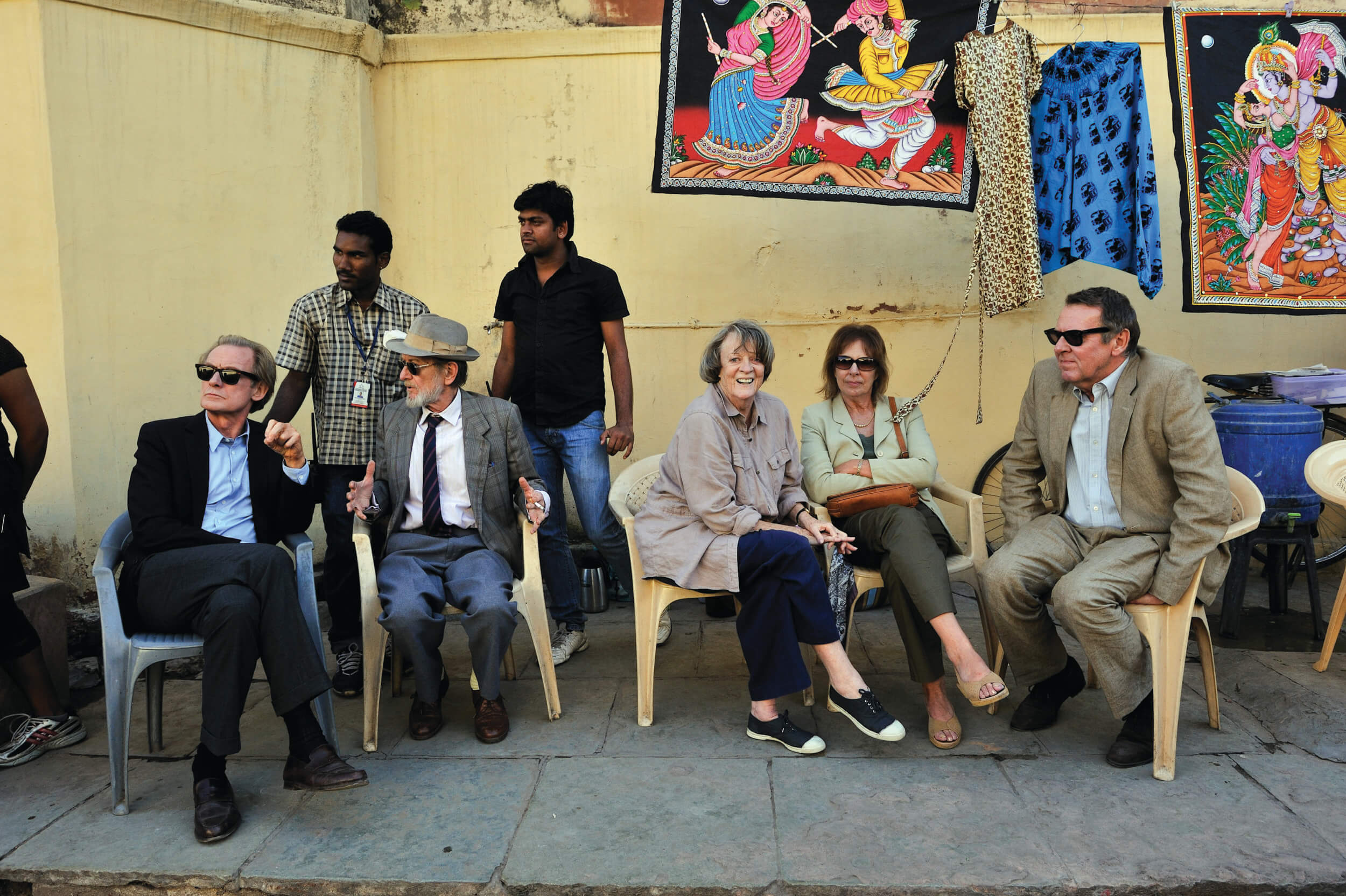
Smith on the set of The Best Exotic Marigold Hotel alongside (from left to right): Bill Nighy, Ronald Pickup, Penelope Wilton and Tom Wilkinson
Being a costume designer is interesting because costumes are a language: what we wear is how we present ourselves to the world and that’s especially important in a film where you don’t have much time to convey who this character is. So you find fabrics, clothes and costumes that you think will work, but the director has a vision and the actors do too – which can lead to some tension. If it’s a period piece obviously the look of a character is more fixed, but if it is something set in contemporary times then it’s far more open. I think that’s why Maggie was so vocal when it came to what she wore; she said that once she had the costume right that was half the battle when finding the character.
The second time I worked with her was on The Best Exotic Marigold Hotel [a 2012 movie, set and filmed mostly in India]. It had a brilliant cast including Bill Nighy, Tom Wilkinson, Celia Imrie and Judi Dench. Maggie and Judi were great friends, they often played draughts together and on their days off they’d go to temples or buy pashminas at the local market.
Again Maggie took an initial dislike to her costumes. On a daily basis she’d say, ‘I’m not wearing that’ and in the end I said, ‘Well, if you don’t, Maggie, you’ll have to do it naked’. That tickled her. Two or three days in, I managed to sprain my ankle quite badly and she was really sympathetic about it. I think it kind of helped me out, to be honest. She also said it was my own fault for having overly small feet, thus chiming in with the duality of her personality, being spiky, yet sympathetic.
While I was getting her dressed we’d often talk about my mother, who loved Maggie. After I told her this, Maggie would always say ‘How’s your mum?’ I never, ever, ever ask for autographs, but at the end of the shoot I plucked up the courage to ask Maggie for one for my mother, who’s also called Margaret. To my surprise she agreed and she wrote in a card ‘Dearest Margaret, this is to wish you a happy Christmas from one Margaret to another’. When I gave it to my mother she cried. That was the yin and yang of Maggie Smith, she could reduce people to tears, but for very different reasons.
By the time we worked together on Quartet [a 2013 film about retired opera singers directed by Dustin Hoffman] she’d started greeting me by saying ‘Oh there you are’. Just a little barbed comment to start the day, implying that I’d been keeping her waiting. I think she really enjoyed working on that film – like Marigold it had a great cast of her peers, including Tom Courtenay, Michael Gambon, Pauline Collins and Billy Connelly. She and Billy had great fun. Maggie loved the company of funny men – she had been great friends with Kenneth Williams and Frankie Howerd. She was so entertaining and she also wanted to be entertained herself.
For all the bravado, deep down I think she was quite shy and reserved. To me that’s what made her such a good actor: there was always something that she didn’t reveal and that made her characters interesting. You wanted to know more about them, and about her. That’s what a good actor does – they hold back a story to allow whoever’s watching to work it out for themselves.
After Quartet our paths crossed again when I did some work on [the television series] Downton Abbey. She’d greet me with a ‘How’s your mother?’ and, occasionally, a ‘So there you are’. Some people think her character in Downton was very much like Maggie was in real life. They both came out with some corking one-liners and both had very long lists of things they disapproved of – although Maggie’s way of expressing things was often unrepeatable! Still, you’d find yourself inwardly agreeing with her – she was speaking your mind as much as hers.
Rather than her character in Downton I think the character she played in Marigold Hotel most resembled the person I knew. They started off being quite guarded, a bit brittle and angry – and you could interpret Maggie as being quite angry – but as the character developed you could see there was a heart there too. She had so many wonderful roles, but I particularly liked her in that.
With Maggie there was this sort of hard nut which, if you were lucky, you could crack and then you’d find somebody unique. When I heard that she had died it was terribly sad because you just think, ‘There will not be another Maggie Smith, that’s for sure’. I lost my mother about four years ago, so I like to think they’re talking to one another now. Waiting to greet me with a ‘So there you are’.
“Maggie and her character in Downton Abbey both came out with some corking one-liners and had very long lists of things they disapproved of”
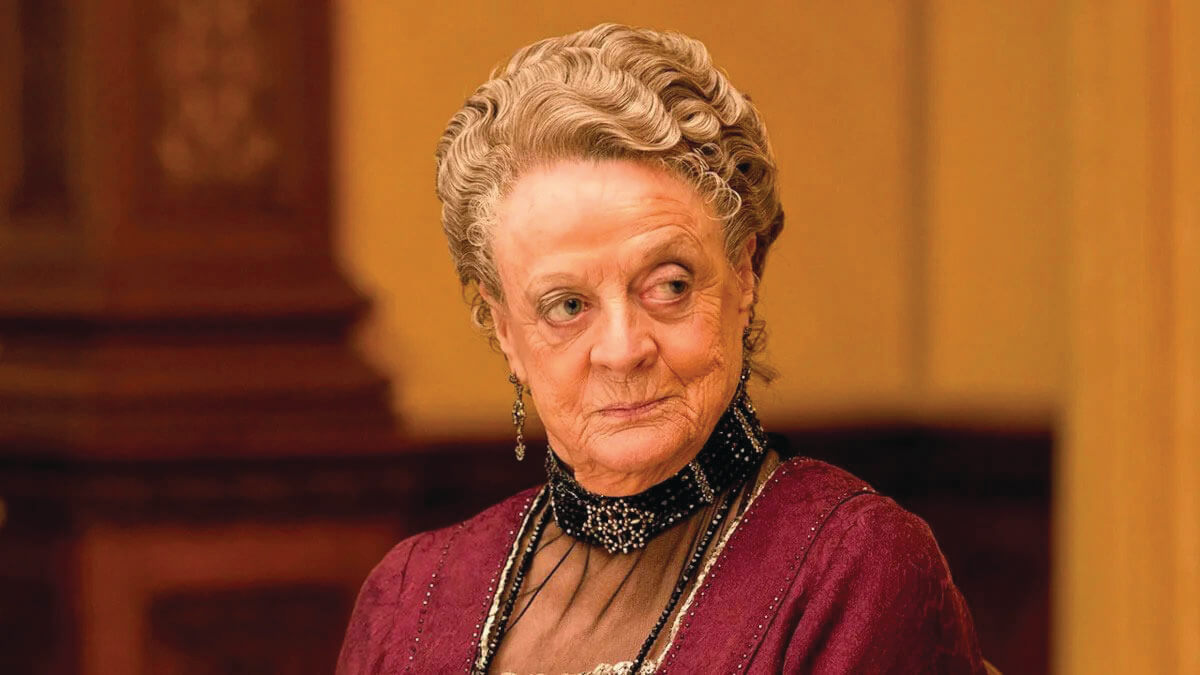
Here’s a list of everything Maggie Smith’s Dowager Countess took exception to in the first series of Downton Abbey…
Americans • Aristocrats who… act gleefully | don’t have servants | go into pubs • Banking • Being invited to someone’s house for lunch cooked by a former prostitute • Blackmail • Burns victims claiming to be heirs to Downton Abbey • Busybodies • Buying the home of a bankrupt family • Catholic priests • Chatterboxes • Cocktails • David Lloyd George • Downton Abbey being turned into a convalescent home • Drunken Irishmen • Electric chandeliers • Foreigners who die in other people’s houses • Former valets working in pubs • Giving power to ‘little people’ • Gold-diggers • Graceless landowners • Gramophones • Granddaughters who… drive tractors | get married to much older men | go canvassing | read too many novels | take up gardening | visit newspaper editors | wonder whether they should write newspaper columns • Greek drama • Guests admitted without the date of their departure settled • Her deceased mother-in-law • Inappropriate… engagements | evening wear | friendships • Inconvenient entails • Liberal politicians • Maids leaving selfishly to get married • Manchester • May weddings • Middle-class defeatism • Mixed-rank convalescent homes • New fashions • New York • Noisy convalescent officers • Obstructive… doctors | vicars • Overly flamboyant flower arrangements • People who… approve of inappropriate marriages | make threats behind laurel bushes | refuse to play charades at Christmas | stand in the way of her granddaughters’ romantic happiness | train as nurses | won’t lie to save other people’s marriages | work in garages • Secretarial tasks • Solicitors • Stirrers • Swivel chairs • Telephones • The Scarlet Letter • The use of the word ‘taken’ as a euphemism for ‘died’ • Things not being the way they were • Unusual nutcrackers • Women who have opinions before they get married
Slow Journalism in your inbox, plus infographics, offers and more: sign up for the free DG newsletter. Sign me up
Thanks for signing up.