Growing pains
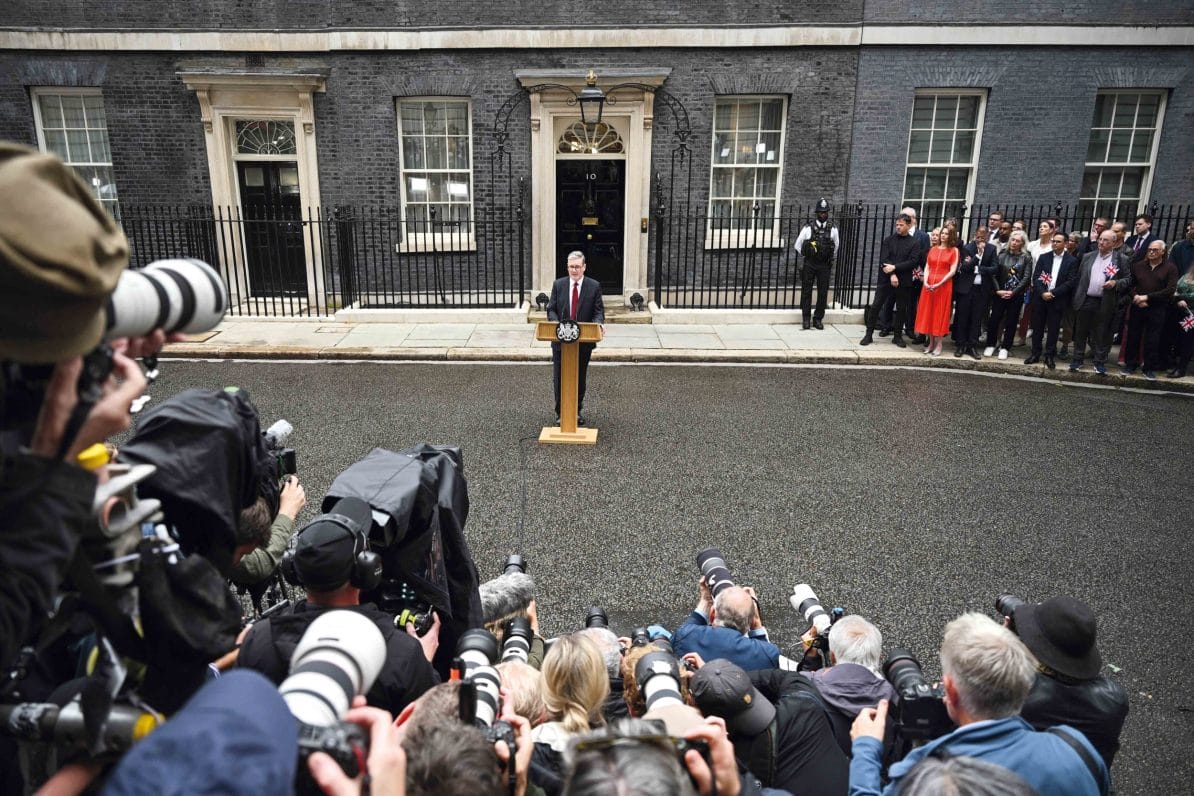
July saw Sir Keir Starmer enter Downing Street as the UK’s new prime minister, bringing 14 years of Conservative rule to an end. His incoming Labour government has set itself key ‘missions for national renewal’ for its time in power. In this article we consider the biggest challenges it faces in fulfilling its pledges on the economy
5th July 2024 (Taken from: #56)
The new government’s economic mission is to ‘Secure the highest sustained growth in the G7 – with good jobs and productivity growth in every part of the country’. This would require a significant change in the UK’s performance over recent years. Carl Emmerson, deputy director of the Institute for Fiscal Studies (IFS), talks us through the obstacles the government faces – and the levers that the chancellor, Rachel Reeves, is able to pull
Delayed Gratification: How has the UK economy changed since the end of the last Labour government in 2010?
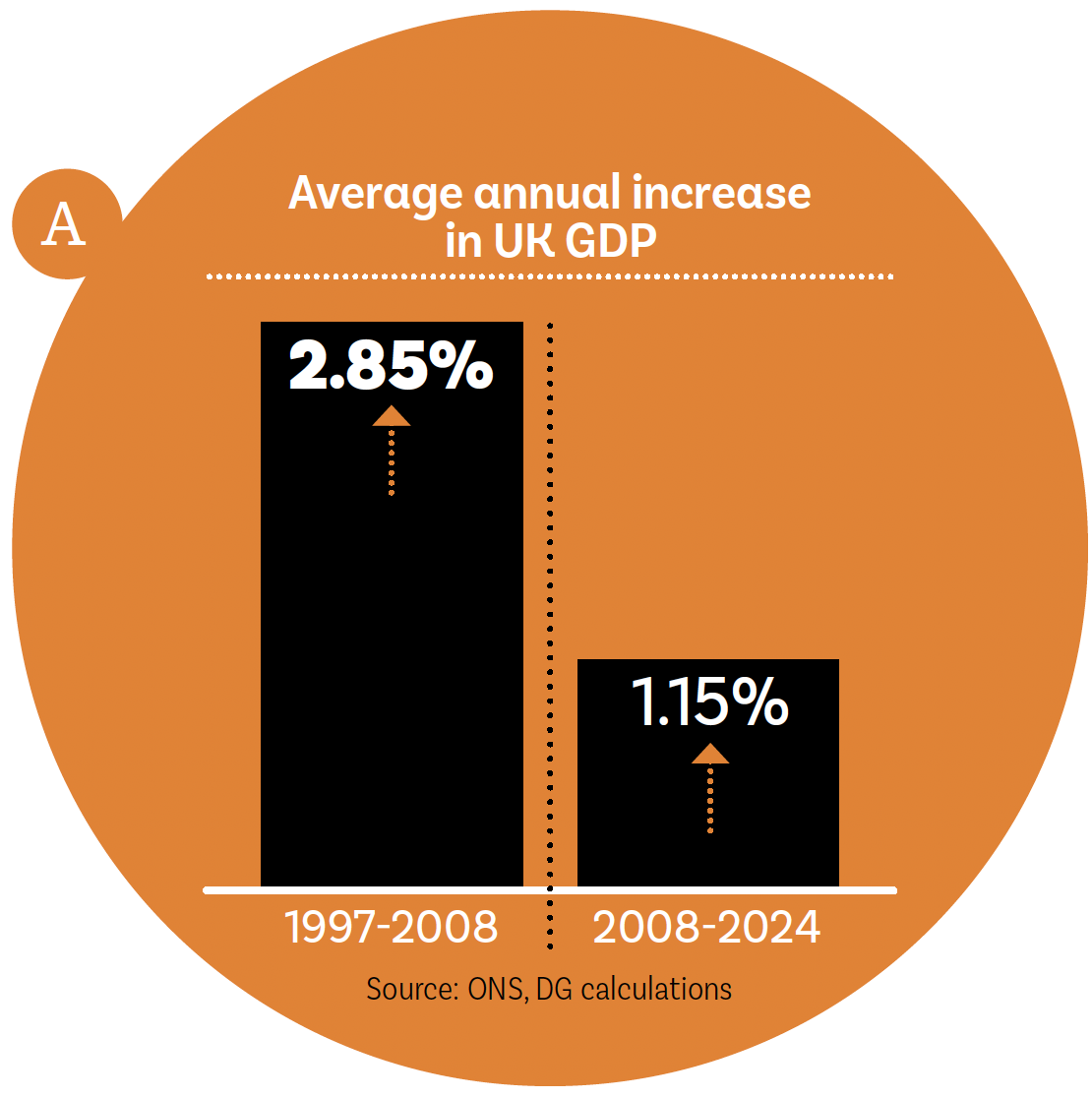
Carl Emmerson: You’re asking that as if the dates of the general elections are the key moments. But actually, I think the right moment to pick is 2008 [when the financial crash hit] because we enjoyed what now looks like really quite nice growth over the course of 1997 to 2008. We were used to a world in which advanced economies had grown at around two and a half percent a year since the end of the Second World War. That kind of growth rate looks amazing now because the period since 2008 has been absolutely abysmal (↓A).
What happened?
The financial crisis really hurt the UK economy more than most — not surprising because we were more exposed thanks to our big financial sector. But as well as the size of that recession, what is very striking is how weak the recovery was through the 2010s. Then of course Brexit hit, and the vast majority of economists who have looked at it in detail agree that it has been bad for growth. Then you have a period where you get quite a lot of policy instability coming in, about what kind of Brexit we were going to have. And then the pandemic, followed by the cost of living crisis that came in 2022.
Apart from these shocks, what lies behind the poor growth?
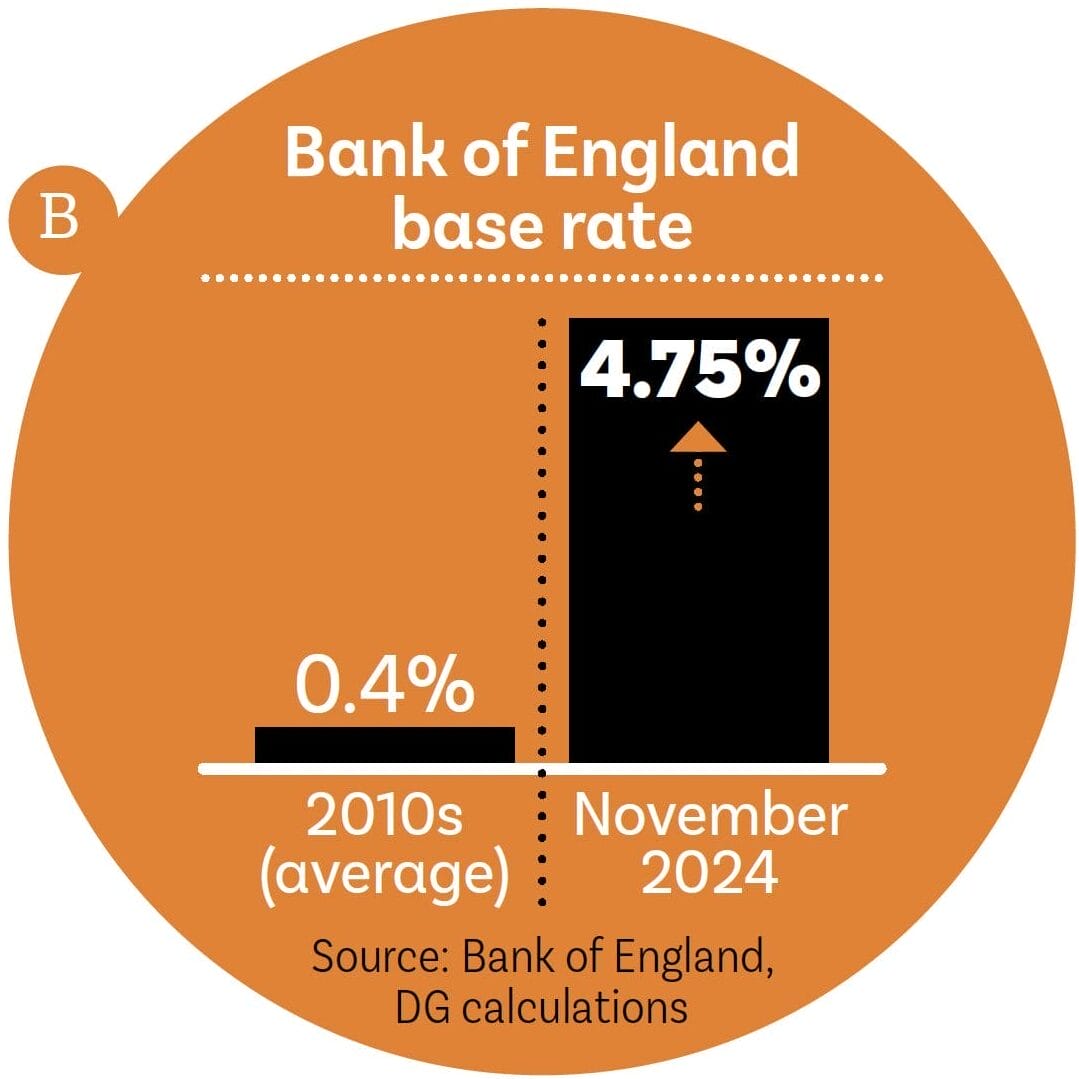
We don’t exactly know. Employment has been really quite strong and the hours of work have held up pretty well for some groups, but productivity — the amount produced per hour worked — has looked terrible and that’s what really matters for living standards. Productivity going up is what means hourly wages can go up. One theory about low productivity is that the low interest rate era of the 2010s meant that a whole load of UK companies managed to limp on through borrowing money affordably, even though they weren’t very productive. The fact that interest rates are now much higher than in the 2010s (↑B) may mean that more low-productivity businesses will go bankrupt as a result. And it could be that we see what the economist Joseph Schumpeter talked about as ‘creative destruction’ – when bad firms go bankrupt, their capital and their workers flow to more productive uses and you end up with a more productive economy.
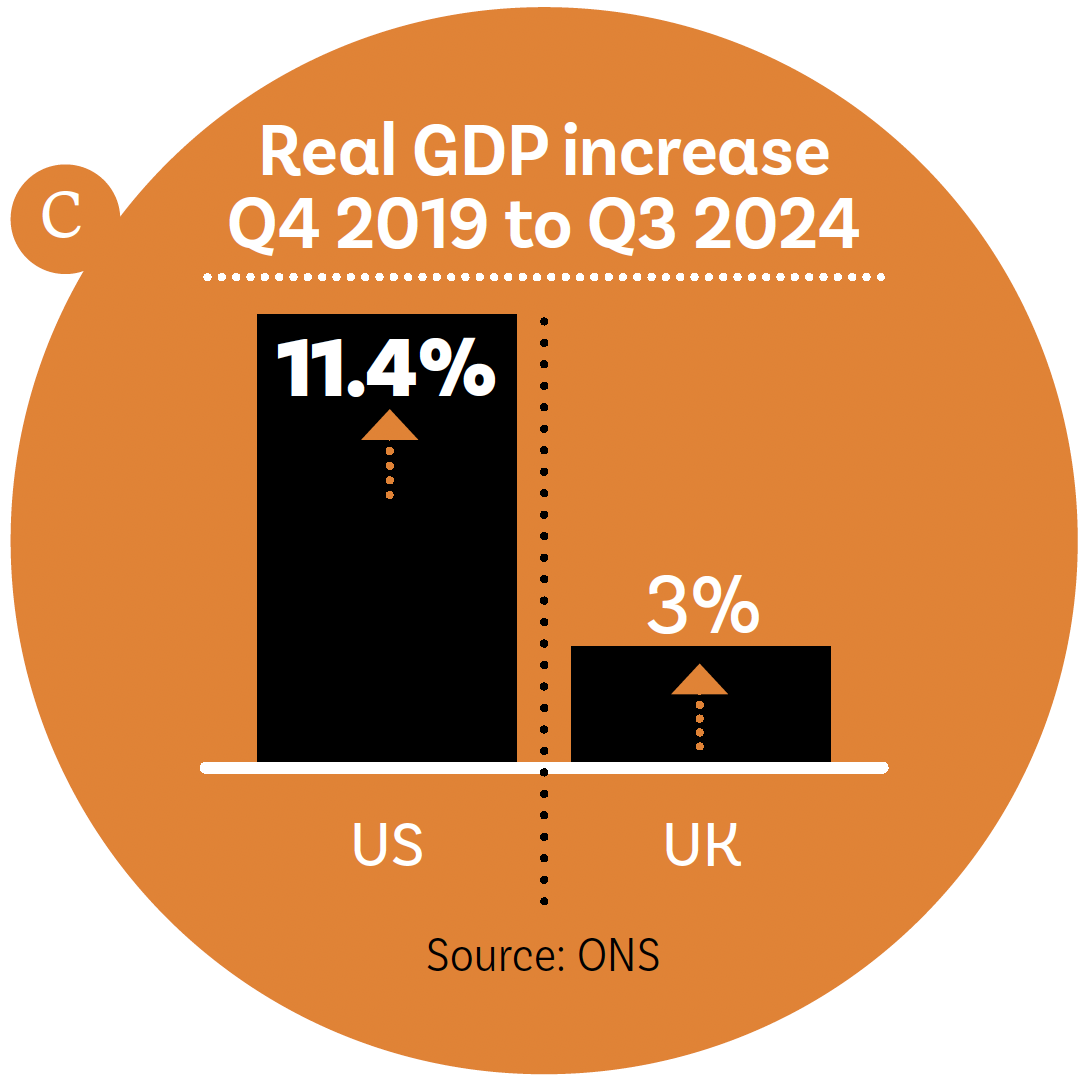
But the US has had low interest rates for a long time too, and is streets ahead of the UK economically… (↑C)
Yes but the US has been running looser fiscal policy — borrowing more money than the EU or the UK. And it has the advantage, at least at the moment, of the dollar being a reserve currency, so people seem happy to lend to it.
The markets reacted well to the new government back in July – why was that?
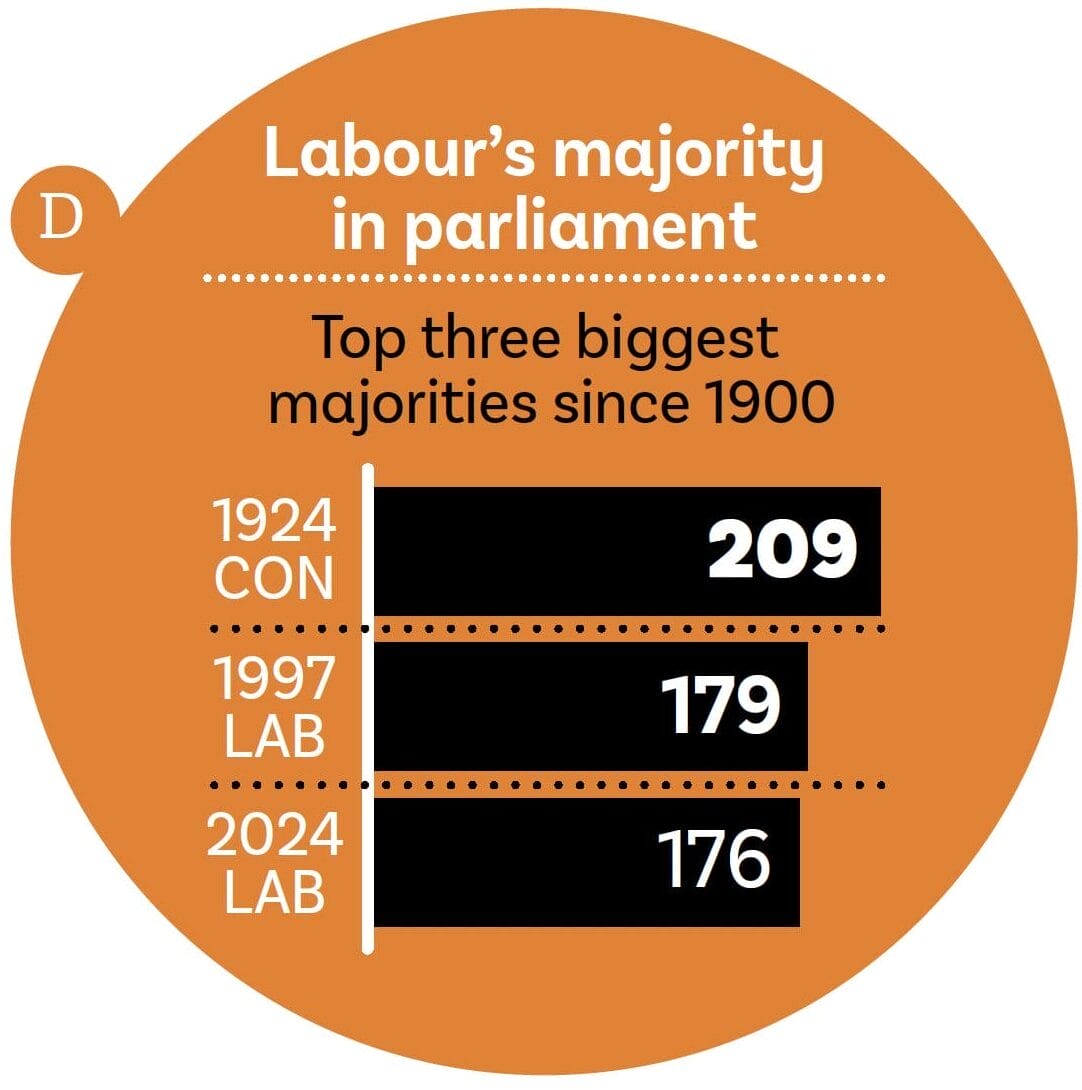
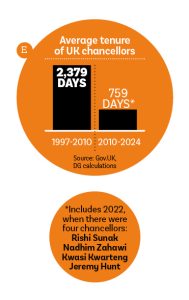
A government having a very big majority (↑D) and looking as if it’s going to be in power for a long period of time is good for growth. I think we’d always like the UK’s chancellor to act as if he or she is going to be chancellor for at least ten years (↓E). That’s why the Liz Truss premiership was kind of a textbook example of what you don’t want to do. That was not a period of policy stability. Brexit was not a period of policy stability. And when shocks like financial crises and Covid come along, they’re not the government’s fault, but they also create a lot of instability. And then there’s lots of political instability caused by things like Russia invading Ukraine in 2022. There’s lots of instability now around the extent to which Donald Trump is going to increase tariffs on lots of other countries and what effect that might have.
But if the new government can, as far as possible, reduce the amount of policy uncertainty in the UK, that can only help. If you’re thinking, ‘Do I locate a big new plant in the UK, the sort that once I’ve decided to do it, I can’t reverse that decision for 20 years?’ then you want to know what the rules are going to be and if other countries look less stable, it may be to the UK’s advantage.
What else can the government do to generate economic growth?
Economists know what you need to do to get good growth, it’s not a mystery. The hard bit is the politics of it, how to get those policies through – because people don’t just care about growth. So, for example, if we want to achieve net zero, we’re trading that off against saying ‘Let’s just maximize GDP’.
Europe is our nearest and richest trading partner. So getting as close as we can to it – which would point to customs union and single market re-entry – would be good for growth, but it would have consequences because it requires a reduction in sovereignty and it’s in the Labour manifesto that they won’t do that.
The government is talking about planning reform and in Keir Starmer’s conference speech [on 24th September 2024], he said things like if you want to have more houses, somebody’s got to have some pylons running through their back garden. I think he should be applauded for explicitly acknowledging that there are trade-offs and that he’s prepared to make some people unhappy. Planning is one of those classic things where if you get it right, you’ll make the economy bigger and people richer, but there will be some people who will lose out.
There’s also education and skills policy, immigration policy; these areas have some difficult politics around them. Tax reform can play a part too – if you’re going to have the tax burden at its highest level, it’s better to have a reformed system, and the importance of that grows as the size of the state gets pushed up.
How difficult is the task facing Reeves?
It’s certainly very challenging at the moment. When I’m asked what makes a good chancellor one of the answers I tend to give is ‘being lucky’. The economy could grow really strongly over the next five years just because it would do anyway, not due to actual policies that the government introduces. It could even be despite them. Covid was bad luck, for example. Boris Johnson didn’t create Covid, and it created the biggest recession we’ve had since the Great Frost of 1709.
So getting lucky is important. That said, at the start of 2024, we at the IFS were already pointing out that getting debt falling by the end of this parliament looked like it could be harder than in most parliaments in recent history because we’ve got a lot of debt and all of a sudden it’s expensive to finance, unlike in the 2010s, and we’ve still got these low growth forecasts.
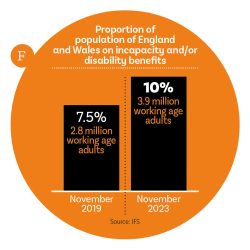
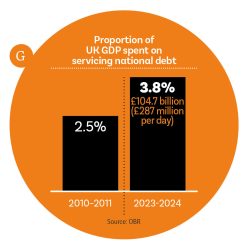
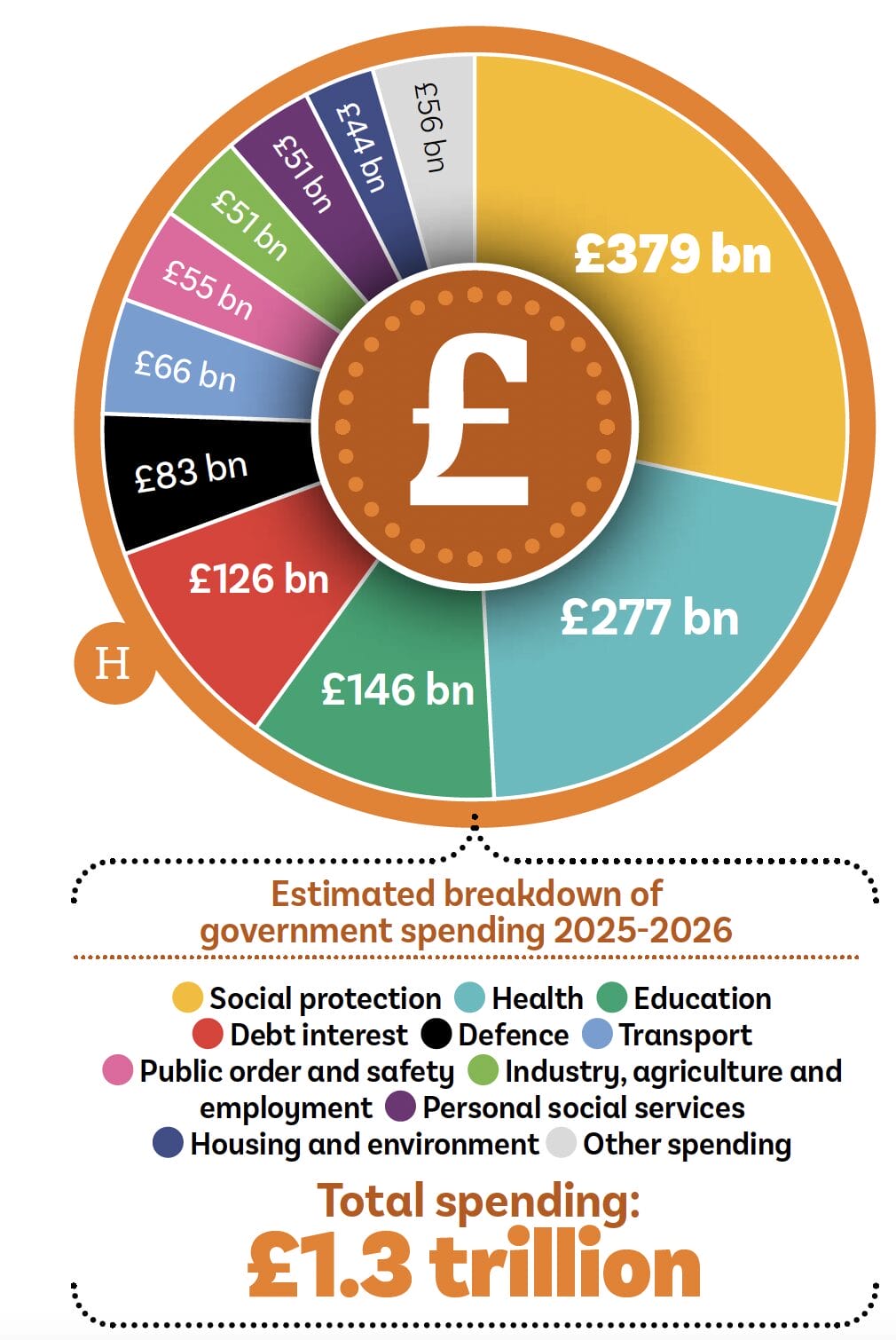
In addition you’ve got working-age welfare bills which are rising really sharply because of increasing numbers of people applying for and getting onto incapacity and disability benefits (↑F). We don’t really want to be spending money on these benefits or on debt interest (↓G). We’d rather people were getting healthier and those bills were coming down. And we have all these public services creaking and we already have the tax burden in the UK at its highest level ever, so whacking up taxes doesn’t look like that attractive an option.
And then there are longstanding pressures like the ageing population. The baby boomers are reaching the stage of their lives where they’re putting a lot of pressure on the health and social care budgets. So it does look like a really difficult time for the chancellor.
Did Reeves’s first budget in October contribute to the growth mission?
It maintained public sector investment at its current level, which is good for long-run growth and clearly helps the economic mission, which is explicitly about sustainable growth.
I think that is to her credit, because when chancellors have fiscal problems they often cut investment spending because the cost isn’t felt for quite some time. It’s pretty clear though that the big national insurance increase is going to be a headwind to growth over the next couple of years. It’s going to make it more expensive for employers to hire people in the medium term and we think that’s going to feed through into slower wage growth.
It’s also notable that the government is borrowing more money for day-to-day spending on public services. There is a very strong argument for why we might want a better NHS but it’s not really about growth. It’s the same for other public services like courts – the justice system did get a lot of the money, the Department for Energy Security & Net Zero got a lot of the money, for moving towards net zero. Again, that’s not about growth, but it’s understandable why you’d do it. And the risk is what happens if public services (↓H) aren’t fantastic in 18 months’ time.
If President Trump does pursue his stated policy of bringing in new tariffs on foreign imports into the US and the world descends into trade wars, is the UK going to be in a difficult position?
Yes but we do have choices. I’m not an expert on possible UK-US trade deals, but in the press people always talk about agricultural standards and US healthcare companies wanting to be involved in NHS delivery and to get their hands on the fantastic data that the NHS has. The British government could offer up all of these things [to get a trade deal with the US, which it has been pursuing since Brexit], and it would be better for growth than not having a trade deal with the US. Again there are trade-offs, and we might not want those things. At the very least we might need to brand chlorinated chicken [common in the US, banned in the UK, and which became symbolic of a potential US trade deal] in a better way.
But trade with the EU is much bigger than trade with the US. We can see that in the UK small and medium-sized companies have really stopped trading with the EU and it’s not because of tariffs, it’s because of non-tariff barriers, all these forms they have to fill in. If you’re a very big firm, you can probably employ some people to navigate that for you. If you’re a small firm, the overheads make it not worth it. That’s the trade-off writ large.
Why is the second part of the economic mission – spreading growth around the UK – so difficult to achieve?
Governments have been trying to deal with this for a long time. The last government’s levelling-up white paper is a very good piece of work that really goes through what the problem looks like, pins down some measures and defines commitments of what progress should be made. I’d certainly urge the new government to be looking at that white paper. But I think it is hard because you do need sustained effort over a long period of time. Take the example of education policy, perhaps thinking about where your universities are located. There are parts of the country that many young people leave to go to a university town. So if you want good growth in jobs all over the country, you probably need to think about policies that will deal with that, which will take decades to yield results.
Does the UK have anything left in the tank if another big economic shock comes in 2025?
I think we’ve learned that if there’s a big negative shock that hits everybody, the UK government can respond pretty significantly and quickly. During the pandemic it borrowed enormous amounts of money at very low levels of interest. But we’ve got even more government debt now, a lot borrowed on a very short term basis. What happens if we want the government to step in with extra spending or tax cuts and a lot more borrowing? If everybody’s borrowing more, I think Covid shows there’s a good chance we can get the money we need, and get it more cheaply. But what happens if it’s a UK-specific shock?
Policymakers do need that ten-year vision, we want them to tackle lots of those trade-offs that Keir Starmer talked about in his conference speech, plus some extra ones too. But I would rather they didn’t do things like rule out lots of tax rises, for example, as Labour has done. They have to be innovative and nimble, be prepared to do things that they previously wouldn’t have imagined having to do, because one of the lessons from the period since 2008 is that big, nasty shocks do come along.
Slow Journalism in your inbox, plus infographics, offers and more: sign up for the free DG newsletter. Sign me up
Thanks for signing up.