Inside DG #60: The Nazi-looted art discovery
A Q&A with the illustrator of our graphic journalism piece from issue 60 of Delayed Gratification
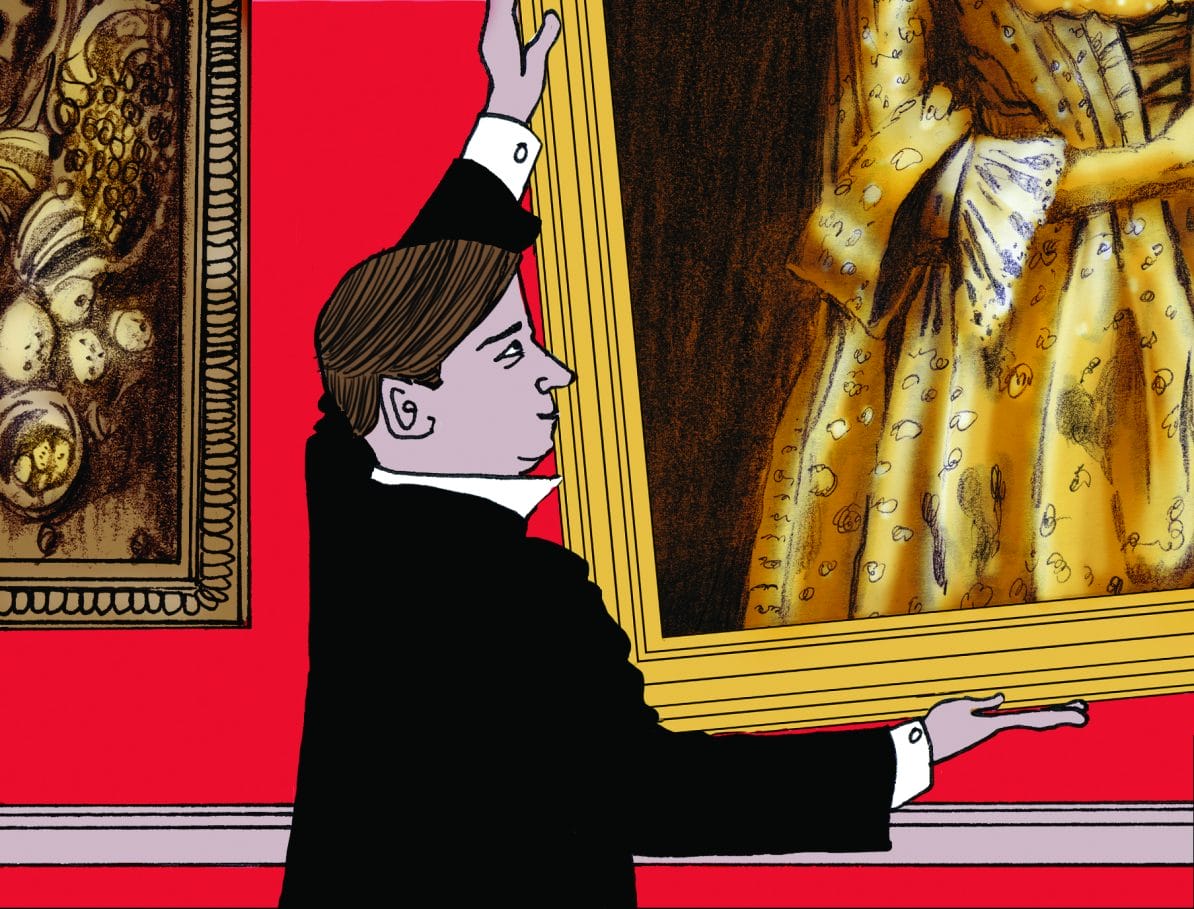
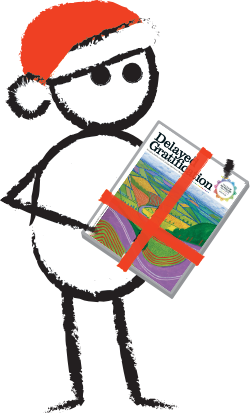
The 60th issue of Delayed Gratification features a stunning piece of graphic journalism by Carol Adlam about the discovery of a painting looted by the Nazis that turned up on the website of an Argentinian estate agent. The story of the chance discovery of ‘Portrait of a Lady’, painted in northern Italy in the 18th century and once the possession of a Dutch-Jewish art dealer who fled the Nazi occupation of the Netherlands, spans two continents and four centuries, and is vividly brought to life by Carol’s illustrations. Delayed Gratification’s associate editor Matthew Lee spoke to Carol about her work on the story.
Matthew Lee: What appealed to you about telling the story of ‘Portrait of a Lady’?
Carol Adlam: This story caught my eye when it first hit the news, because it was one of those that raises more questions than it answers. What do you mean someone spotted a stolen Old Master as they were casually browsing Argentinian estate agent listings? How did it get there? What is this strange-looking painting anyway? And I realised that behind this one curious story lay something much bigger and darker. I hadn’t realised the extent of the Nazi operation to plunder art and treasure – it was on an industrial scale.
What did you particularly enjoy most about illustrating this story?
It was enlightening to attempt to draw ‘Portrait of a Lady’. There aren’t any high resolution images of it so it is quite unclear exactly what it looks like, and I think it looks quite weird in the available photos. But in the process of drawing I worked out that the woman is holding a book, and also that she is wearing a mantua – a coat-like gown with a sort of bustle. You can just about see the tiniest trace of it rising up behind her back, and you can tell from the way the cloth is falling at her side that it is an extra layer over her dress. I also think the material is silk as you can make out a faint sheen. Also, her face made much more sense to me when I drew it – she has an unusual mouth and is quite striking. It’s one of those examples where drawing reveals something that photos don’t. All of which is to say that the photos don’t do the painting justice, but I hope I have gone some way to showing her (and the original artist’s work) in a better light. I’ve also drawn some other paintings from Goudstikker’s collection. You just see snippets of them but they are all based on images of works that also seem to be in Patricia Kadgien’s possession.
You also drew Hermann Göring, a Nazi war criminal…
I spent far too long looking at videos and photos of him. As well as being a grotesque, immoral human being, he was a popinjay, obsessed with elaborate clothes and props.
What can a graphic journalism approach add to a story such as this one?
Graphic stories like these are obviously an imaginative response to a set of events but I always extrapolate from other sources, visual and textual, and then imagine a scene or image, perhaps from an unusual point of view. They also allow you to offer something a bit playful to the reader – so in a Delayed Gratification story I did about Saddam Hussein’s ‘supergun’, the actual panel frames are on a gradually sloping diagonal – and if you were to lay out the pages end to end they form the silhouette of the enormous long gun itself. And in this story readers might notice that I show parts of the painting throughout – a foot here, a bit of fabric there – so it’s like a jigsaw puzzle, and only on the last page do you see the whole thing. Ta-da! I love that magic element to drawing, and I think you can bring that to graphic journalism as well.
You’ve been contributing graphic journalism to Delayed Gratification since 2018. Do you have a favourite piece you’ve done for the magazine?
The story of the lost footballers in the Thai cave has a place in my heart because it was the first one I did, and it was such a moving story – I found myself gasping at how they got the boys out alive – but I think my favourite remains the one about Trump and January 6th. We were flooded with media images of it, so the challenge was to say something a bit different. I particularly enjoyed showing Trump peering round a curtain at the waiting crowds, and the media cavalcade rushing into the very run-down rear entrance of the Four Seasons garden centre…
You can find Carol’s graphic journalism piece on the discovery of Nazi-looted art in issue 60 of Delayed Gratification, available from our online shop here.
Slow Journalism in your inbox, plus infographics, offers and more: sign up for the free DG newsletter. Sign me up
Thanks for signing up.